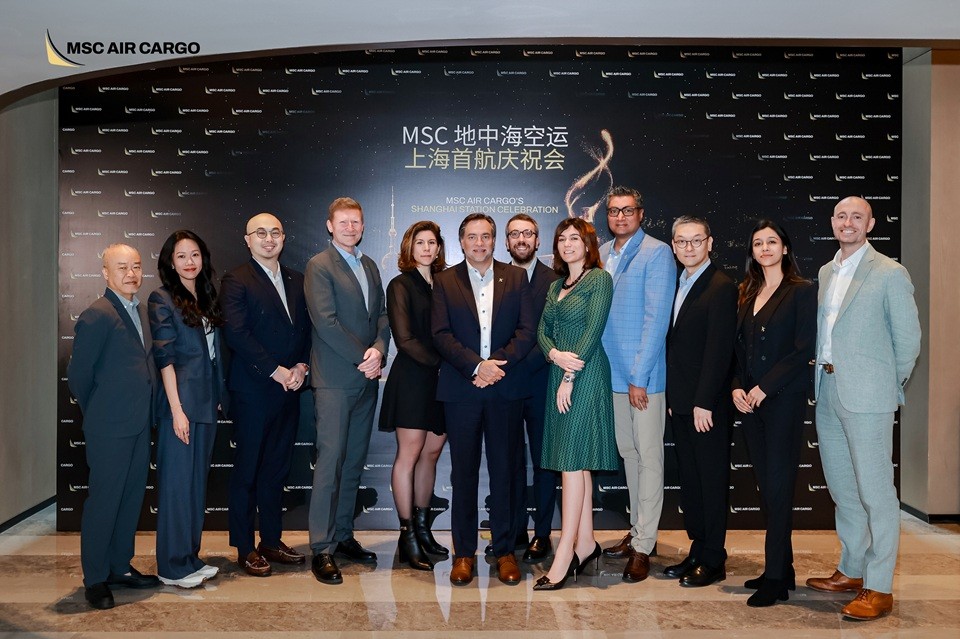
According to www.aircargonews.net, MSC Air Cargo has officially opened its Shanghai Pudong (PVG) station as a strategic move to expand its presence in the Asia Pacific region. The carrier identifies Shanghai Pudong International Airport as a critical gateway for international trade flows, and its integration into MSC Air Cargo’s operational network strengthens service capabilities on key intercontinental corridors—particularly between Europe and Asia.
Strategic Partnerships and Network Expansion
The Shanghai station launch follows MSC Air Cargo’s 2025 partnership announcements with two China-based entities: parcels giant SF Express and Shanghai Airport Authority Logistics Development Co. (AVINEX). The airline states it already maintains an established partnership with SF Express on the Asia–Europe trade lane. AVINEX is jointly supporting the development of Shanghai Pudong as a core gateway within MSC Air Cargo’s Asia-Pacific network.
Earlier in 2026, MSC Air Cargo launched scheduled freighter services on the Milan Malpensa–Shanghai Pudong (MXP–PVG) route. This complements its broader expansion in Italy, where the carrier now serves both Rome Fiumicino (FCO) and Milan Malpensa (MXP), connecting both Italian gateways with Hong Kong (HKG), Shanghai Pudong (PVG), and the newly introduced Ezhou Huahu (EHU).
Fleet Growth and Operational Model
MSC Air Cargo was launched in late 2022 and operates a growing fleet of Boeing 777-200 Freighters. Earlier this year, the carrier took delivery of its seventh 777-200F—including three Italian-registered aircraft used to expand Italian coverage. In addition to its owned fleet, MSC Air Cargo relies on a long-term ACMI (aircraft, crew, maintenance, insurance) agreement with Atlas Air, which operates four 777Fs on its behalf.
Leadership Perspective
“With the launch of our Shanghai gateway, we are establishing a cornerstone of MSC Air Cargo’s Asia‐Pacific trade corridor. It reflects our long‐term commitment to the region and to working closely with local partners to build a sustainable, forward‐looking platform.” — Jannie Davel, chief executive of MSC Air Cargo
For global supply chain professionals, this development signals increased air cargo capacity and infrastructure investment along the high-volume Asia–Europe corridor—especially relevant amid ongoing port congestion, Red Sea disruptions, and demand for faster, more resilient alternatives to maritime-only lanes. The PVG station also enhances multimodal options for shippers managing time-sensitive or high-value goods, particularly those leveraging SF Express’ domestic parcel network for first- or last-mile integration. With Ezhou Huahu—a dedicated cargo airport under development by SF Express—now linked into MSC’s network, end-to-end air logistics from inland China to European hubs gains new operational coherence.
Source: Air Cargo News
Compiled from international media by the SCI.AI editorial team.