According to m.economictimes.com, India and South Korea have agreed to resume negotiations to upgrade their Comprehensive Economic Partnership Agreement (CEPA), with explicit aims to strengthen supply chains, expand bilateral trade, and deepen cooperation in critical technologies.
Ambitious Trade Target and Institutional Framework
The two nations set a goal to raise bilateral trade from the current $27 billion to $50 billion by 2030. To support this objective, they will institutionalise an economic security dialogue focused on critical technologies and supply chains. An India-Korea Financial Forum was also launched to boost economic engagement and facilitate greater investment flows.
Sectoral Priorities and Industrial Collaboration
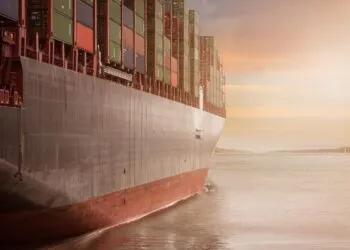
Discussions under the upgraded CEPA will cover shipbuilding, steel, and sustainability — sectors identified as strategic for industrial collaboration. Several memoranda of understanding are being pursued in these areas. Prime Minister Narendra Modi stated the two sides are working to build resilient ecosystems “from chips to ships” spanning technology, energy, and advanced manufacturing.
“Both countries are aligned on core values of democracy, mutual respect and the rule of law, which continue to underpin their partnership.” — Narendra Modi, Prime Minister of India
South Korean President Lee Jae-myung affirmed Seoul’s intent to broaden and deepen economic cooperation with India, specifically highlighting critical minerals, nuclear energy, clean energy, and stable naphtha supply — underscoring the linkage between energy security and industrial inputs.
Context for Supply Chain Professionals
This agreement arrives amid intensifying global efforts to diversify sourcing and reduce overreliance on single geographies. India and South Korea already maintain complementary industrial strengths: India is scaling semiconductor design, electronics manufacturing, and green hydrogen infrastructure, while South Korea leads in memory chip production, shipbuilding, and battery materials. Their CEPA upgrade follows similar moves by other major economies — for example, the EU’s Critical Raw Materials Act (2023) and Japan’s 2024 Economic Security Promotion Act both prioritise secure access to critical inputs and trusted technology partnerships. For supply chain professionals, this signals growing opportunities for dual-sourcing arrangements, joint ventures in Tier-2/Tier-3 component manufacturing, and alignment on sustainability-linked procurement criteria — particularly in steel and shipbuilding, where decarbonisation standards are rapidly evolving.
Source: m.economictimes.com
Compiled from international media by the SCI.AI editorial team.