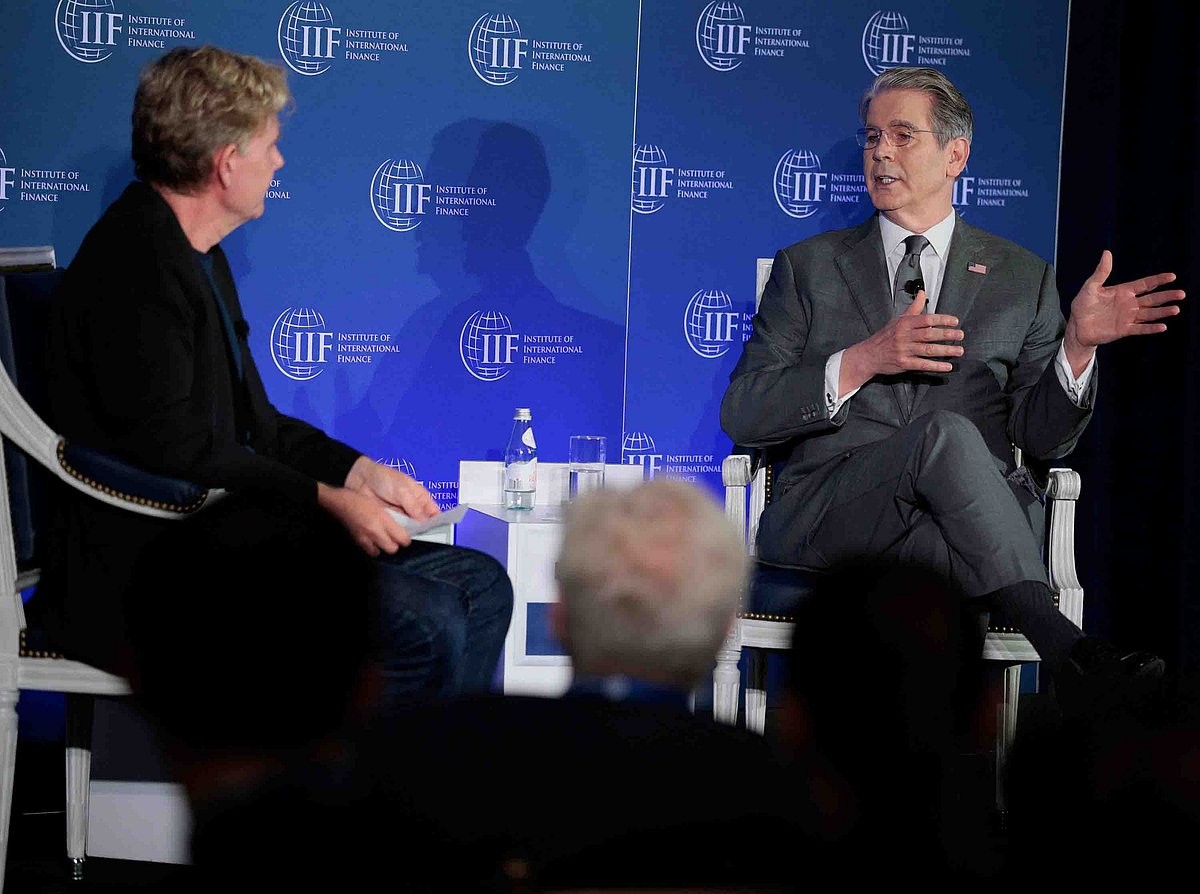
According to gulfnews.com, US Treasury Secretary Scott Bessent affirmed that the US economy remains fundamentally strong and projected growth could exceed 3.5 percent in 2026.
Economic Resilience and Growth Outlook
Bessent made the remarks during a Wall Street Journal Opinion Live event in Washington, citing robust domestic demand and structural resilience as key underpinnings of the elevated growth forecast. A pace of 3.5 percent would represent solid expansion by historical standards and signal sustained momentum across consumer spending and business investment.
Tariff Policy Reversal Expected by July
A critical development for global supply chain professionals is the anticipated rollback of US tariffs. Bessent stated that tariffs imposed by former President Donald Trump under emergency authority will return to previous levels by July 2026, following the Supreme Court’s February 2026 ruling that Trump had exceeded his statutory authority in enacting broad global tariffs.
“US tariffs imposed on other countries could return to previous levels by July, after the Supreme Court ruled in February that President Donald Trump had exceeded his authority by imposing broad global tariffs under the emergency law.” — Scott Bessent, US Treasury Secretary
This policy shift follows heightened scrutiny of executive trade powers and reflects growing institutional constraints on unilateral tariff actions. For supply chain planners, the July timeline introduces a concrete inflection point for cost modeling, sourcing recalibration, and customs compliance planning — particularly for importers reliant on goods from China, Southeast Asia, and the EU.
Context for Supply Chain Practitioners
While the source does not quantify sector-specific impacts, the tariff reset directly affects landed cost calculations, duty drawback eligibility, and country-of-origin documentation requirements. Historically, US tariff adjustments have triggered rapid reevaluation of supplier networks: for example, the 2018–2019 Section 301 tariffs prompted over 40% of surveyed US importers (per 2023 CSCMP data) to diversify manufacturing locations or renegotiate Incoterms. The upcoming adjustment arrives amid persistent geopolitical uncertainty — including ongoing Red Sea disruptions and evolving USMCA enforcement — further underscoring the need for agile, scenario-based trade compliance frameworks.
The forecast also comes against a backdrop of tightening monetary conditions: the Federal Reserve maintained its benchmark rate at 5.25–5.50% through Q1 2026, per publicly reported FOMC minutes. Elevated borrowing costs continue to pressure working capital cycles, especially for SMEs managing extended supplier payment terms and inventory financing. Supply chain finance solutions — such as dynamic discounting and receivables monetization — are gaining traction as tools to offset these pressures while maintaining supplier stability.
Source: gulfnews.com
Compiled from international media by the SCI.AI editorial team.