# The 2026 Inflection Point: How the Top 100 Logistics & Supply Chain Technology Providers Are Redefining Resilience, Intelligence, and Integration
In April 2026, *Inbound Logistics* magazine unveiled its annual **Top 100 Logistics & Supply Chain Technology Providers** list — not merely as a ranking, but as a strategic diagnostic of the industry’s collective evolution. Now in its 18th year, this authoritative compilation offers far more than a directory of vendors; it maps the accelerating convergence of data, intelligence, and execution across global supply chains. What stands out in the 2026 edition is not just *who* made the list — though names like **Blue Yonder**, **Aera Technology**, and **AutoScheduler.AI** signal clear market leadership — but *how* the very definition of “supply chain technology” has expanded. No longer confined to transactional systems or siloed optimization engines, today’s leading solutions are **integrated logistics platforms** that fuse real-time visibility, predictive decision intelligence, adaptive automation, and industry-specific orchestration into unified digital supply chain operating systems.
The 2026 Top 100 reflects a decisive shift from digitization to *cognitive transformation*. Where past iterations emphasized cloud migration and system modernization, this year’s cohort demonstrates maturity in deploying **artificial intelligence** not as a feature, but as infrastructure — embedded in freight spend analysis, warehouse labor forecasting, multimodal routing, and even supplier risk scoring. Simultaneously, the rise of verticalized SaaS offerings signals deepening specialization: solutions no longer ask shippers to adapt their processes to software, but instead adapt *to* complex regulatory, seasonal, and operational realities — whether managing temperature-sensitive pharmaceuticals, time-definite e-commerce deliveries, or just-in-time automotive components.
This article examines the 2026 landscape through six critical lenses: the renaissance of core systems (TMS and WMS), the operationalization of AI and machine learning, the strategic ascent of robotics and autonomous orchestration, the dominance of cloud-native **supply chain SaaS**, the imperative of cross-industry customization, and the emerging horizon of self-optimizing, anticipatory supply networks.
—
## The TMS and WMS Renaissance: From Tactical Tools to Strategic Command Centers
Transportation Management Systems (**TMS**) and Warehouse Management Systems (**WMS**) remain foundational — and yet, in 2026, they bear little resemblance to their legacy predecessors. The Top 100 list reveals that leading providers have moved decisively beyond route planning and inventory tracking. Today’s **TMS** functions as a multimodal command center, integrating carrier APIs, dynamic rate benchmarking, carbon accounting, and exception-driven execution — all within a single interface.
Take **Banyan Technology**, for example. Its multi-mode freight execution platform doesn’t just book LTL or parcel shipments; it connects directly to over 1,200 carriers via native APIs, enabling real-time capacity matching and automated tender acceptance — reducing manual intervention by up to 70% in pilot deployments with Tier 1 retail distributors. Similarly, **ARTC Logistics**’ multimodal rate engine ingests live fuel surcharges, port congestion fees, and geopolitical risk premiums — dynamically recalculating optimal lanes not just daily, but *hourly*, during peak holiday surges.
On the warehouse side, **Blue Yonder**’s WMS now embeds labor management not as a standalone module, but as an AI-powered forecasting layer. Using historical throughput, real-time order velocity, and even localized weather data (which impacts same-day delivery demand), it predicts staffing needs 48–72 hours ahead — cutting overtime costs by 18% and improving on-time shipping rates by 9.3% in a recent food & beverage client implementation.
Crucially, the 2026 TMS and WMS are no longer islands. They serve as integration anchors within broader **logistics platform** ecosystems. **Agistix**, for instance, layers its global supply chain visibility platform atop its TMS, allowing users to trace a container from origin port to final-mile driver — while simultaneously triggering automatic notifications, customs documentation generation, and proactive delay mitigation workflows. This shift transforms TMS and WMS from cost-control tools into *resilience enablers*: when a hurricane disrupts Gulf Coast ports, integrated systems don’t just reroute — they recalculate landed cost, reassess inventory allocation across DCs, and auto-adjust production schedules in connected ERP systems.
—
## Artificial Intelligence Moves Beyond Hype: Operationalizing Predictive and Prescriptive Intelligence
If 2023 was the year of AI pilots and 2024 the year of proof-of-concept dashboards, 2026 is unequivocally the year of **operational AI** — where artificial intelligence delivers measurable ROI in daily decision-making. The Top 100 list underscores this transition, with AI no longer relegated to R&D labs but embedded in core workflows across procurement, transportation, warehousing, and risk management.
**Aera Technology** exemplifies this shift. Its “decision intelligence” platform goes beyond descriptive analytics (“What happened?”) to root-cause analysis (“Why did freight spend spike 22% last quarter?”) and prescriptive action (“Here are three contract renegotiation levers, ranked by projected savings and implementation effort”). In one Fortune 500 manufacturing client, Aera identified that 68% of abnormal freight spend stemmed not from carrier rate hikes, but from suboptimal mode selection triggered by outdated master data — a finding that led to $4.2M in annualized savings.
Meanwhile, **A3 Freight Payment** leverages AI not just for anomaly detection in freight bills, but for *predictive contract negotiation*. By analyzing historical carrier performance, tender acceptance rates, and market capacity trends, its models recommend optimal timing and terms for contract renewals — increasing win rates for favorable terms by 34% in Q1 2026 alone.
Even traditionally analog domains are being reshaped. **Acuitive Solutions** applies ML to dynamic routing & execution, factoring in real-time traffic, driver fatigue regulations, EV charging station availability, and even predicted customer availability windows (e.g., “Resident likely home between 5:30–6:15 PM based on 30-day delivery history”) — boosting first-attempt delivery success by 27% for a major home goods retailer.
Importantly, AI adoption is no longer about building proprietary models. As **4flow**’s network design and supply chain optimization suite demonstrates, the value lies in *applying* sophisticated algorithms to domain-specific constraints — such as sustainability targets (scope 3 emissions), tariff exposure, or multi-tier supplier dependencies — turning abstract AI capability into concrete, boardroom-ready scenario planning.
—
## Robotics and Autonomous Orchestration: From Automation Islands to Intelligent Ecosystems
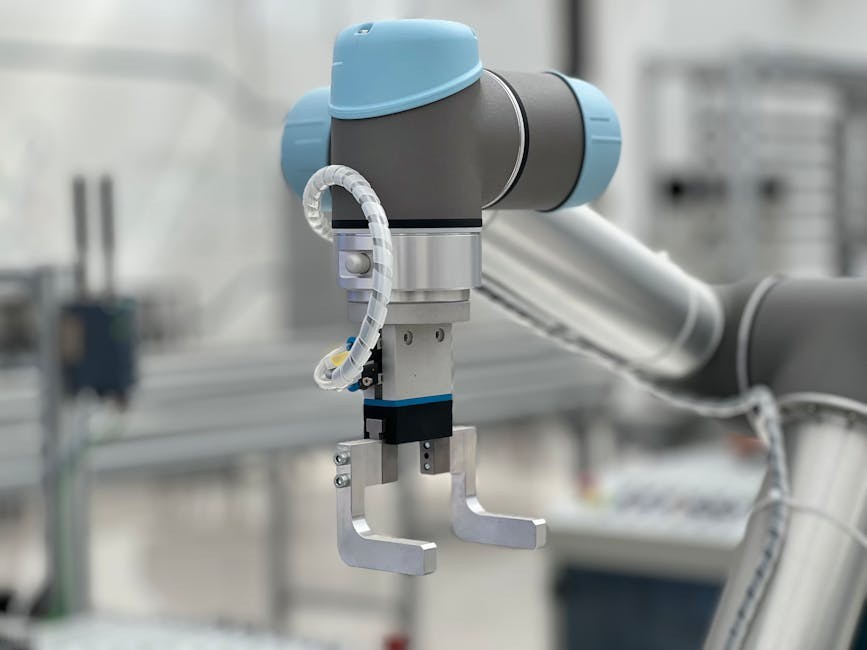
Robotics in the warehouse is no longer synonymous with AMRs moving pallets. In 2026, the frontier has shifted to *orchestration* — the intelligent coordination of heterogeneous automation assets (robots, conveyors, sorters, cobots, and human workers) under a unified decision layer. The Top 100 highlights companies moving beyond hardware vendors to become **autonomous logistics orchestration platforms**.
**AutoScheduler.AI** is emblematic of this evolution. Its “warehouse decision agent” doesn’t just assign tasks to robots; it continuously optimizes the entire workflow based on real-time variables: battery levels, task priority (e.g., expedited e-commerce orders vs. bulk replenishment), equipment maintenance alerts, and even worker skill certifications. In a 2025 deployment at a national pharmacy distributor, AutoScheduler reduced average order cycle time by 41% and increased robot utilization from 58% to 89% — without adding hardware.
Similarly, **Agistix**’s AI-powered data analytics layer doesn’t just monitor robotic throughput; it correlates robot downtime with specific firmware versions, ambient temperature fluctuations, and maintenance logs — enabling predictive maintenance that cut unplanned stoppages by 63%.
The trend extends beyond walls. **Bamboo Rose**, while focused on upstream planning, integrates with warehouse robotics platforms to synchronize merchandise planning decisions with physical execution capacity — ensuring that a newly approved fast-fashion drop doesn’t overwhelm picking bandwidth. This end-to-end alignment represents the maturation of robotics from point solutions to integral nodes in a responsive, data-driven **digital logistics** fabric.
—
## Cloud-Native SaaS: The Engine of Scalable, Secure, and Sustainable Digital Transformation
The near-universal adoption of cloud-native architecture among the Top 100 is no longer noteworthy — it’s expected. What distinguishes 2026’s leaders is how deeply **supply chain SaaS** has evolved beyond “hosted software” to become the primary vehicle for continuous innovation, compliance agility, and sustainable scalability.
Modern supply chain SaaS platforms deliver three non-negotiable advantages:
– **Rapid, low-risk iteration**: Updates deploy weekly, not annually. When new EU Battery Regulation requirements emerged in Q4 2025, **Bamboo Rose** rolled out compliant documentation templates and supplier audit workflows to all customers within 11 days.
– **Built-in interoperability**: Pre-certified connectors to SAP S/4HANA, Oracle Cloud SCM, Microsoft Dynamics 365, and Shopify mean implementations take weeks, not months. **Banyan Technology**’s direct ERP integrations reduce freight invoice reconciliation time by 92% for mid-market manufacturers.
– **Embedded sustainability governance**: Carbon footprint calculation, scope 3 emissions tracking, and green lane optimization are now standard SaaS features — not custom builds. **4flow**’s cloud-based network optimization tools allow clients to model “net-zero by 2035” scenarios alongside cost and service trade-offs.
This SaaS maturity enables unprecedented scalability. A regional food distributor using **Acuitive Solutions**’ cloud platform scaled from 3 DCs to 12 in 18 months — adding new freight audit rules, routing logic, and compliance checks per geography without infrastructure upgrades or lengthy IT projects.
—
## Industry-Specific Intelligence: Why One-Size-Fits-All Is Obsolete
Perhaps the most striking insight from the 2026 Top 100 is the decline of generic supply chain software. Today’s leading providers succeed not by offering broad functionality, but by embedding deep vertical expertise into their platforms — transforming generic modules into purpose-built solutions.
Consider these industry-specific imperatives:
– **E-commerce & Retail**: Demand volatility, micro-fulfillment, and hyper-personalized delivery expectations require real-time inventory visibility across stores, dark stores, and marketplaces. **Agistix**’s visibility platform powers “ship-from-store” decisions in under 200ms, while **Bamboo Rose**’s assortment planning tools factor in social media trend velocity and influencer launch calendars.
– **Food & Beverage**: Shelf-life management, cold chain integrity, and recall traceability are non-negotiable. **Blue Yonder**’s WMS now includes dynamic lot expiration prioritization and automated temperature deviation alerts tied to IoT sensor feeds — reducing spoilage by up to 14% in dairy clients.
– **Pharmaceuticals & Life Sciences**: Serialization, GDP compliance, and track-and-trace down to the patient level drive requirements. **Aera Technology**’s logistics event management includes configurable audit trails meeting FDA 21 CFR Part 11 standards.
– **Automotive & Industrial Manufacturing**: Just-in-sequence (JIS) parts delivery, complex BOM-level traceability, and Tier-N supplier collaboration demand orchestration beyond traditional TMS. **4flow**’s network design tools simulate plant shutdowns due to semiconductor shortages, recommending alternative sourcing and buffer strategies validated against real-world lead times.
This vertical specialization isn’t just about features — it’s about pre-configured data models, regulatory rule sets, and industry-specific KPIs baked into the platform’s DNA. It means a food distributor doesn’t need to hire a data scientist to configure perishability decay curves; the logic is already calibrated.
—
## The Horizon: Anticipatory Networks, Autonomous Governance, and the Rise of the Digital Twin
Looking beyond 2026, the trajectory signaled by the Top 100 points toward three converging frontiers:
1. **Anticipatory Supply Chains**: Systems will move from reacting to disruptions to *anticipating* them. By fusing external data (satellite imagery of port congestion, social sentiment on raw material shortages, weather forecasts) with internal operational data, platforms like **Aera** and **Agistix** will generate probabilistic disruption forecasts — triggering pre-emptive actions like dual-sourcing, safety stock adjustments, or carrier diversification *before* delays occur.
2. **Autonomous Governance**: Regulatory compliance — from U.S. CHIPS Act reporting to EU CSDDD due diligence — will be handled autonomously. Platforms will ingest legislation, map requirements to internal data sources, auto-generate reports, and flag gaps — reducing legal review cycles from weeks to hours.
3. **Enterprise-Wide Digital Twins**: The next evolution isn’t just a warehouse or network twin, but a living, synchronized model of the entire extended enterprise — connecting product design, supplier capacity, manufacturing execution, logistics, and customer demand. **4flow** and **Bamboo Rose**, already collaborating on joint solutions, are piloting twins that allow CPG companies to simulate the end-to-end impact of launching a new eco-packaged product — from raw material sourcing emissions to last-mile delivery carbon cost.
These developments won’t replace human judgment; they will elevate it. Supply chain leaders will spend less time firefighting exceptions and more time designing resilient architectures, nurturing supplier ecosystems, and innovating customer experiences.
—
## Conclusion: Intelligence, Integration, and Intentionality Define the New Standard
The 2026 Top 100 Logistics & Supply Chain Technology Providers list is more than a snapshot — it’s a manifesto for the next era of supply chain excellence. What unites these 100 companies is not just technological sophistication, but a shared commitment to solving *real business problems*: reducing landed cost without sacrificing service, building resilience without inflating inventory, scaling sustainably without compromising speed.
The dominant themes — the **operationalization of artificial intelligence**, the rise of **integrated logistics platforms**, the strategic embrace of **cloud-native supply chain SaaS**, and the imperative of **industry-specific intelligence** — reflect a maturing market. Gone are the days when “digital transformation” meant swapping on-premise servers for cloud hosting. Today, it means rethinking decision rights, redesigning workflows around data-driven autonomy, and redefining partnerships with technology providers as co-innovators.
For supply chain professionals and business leaders, the message is clear: the technology exists. The question is no longer *if*, but *how intentionally* you will deploy it. Will your TMS merely route trucks — or optimize your entire network for profitability, people, and planet? Will your WMS track inventory — or orchestrate a harmonious ecosystem of humans and machines? Will your freight audit tool catch errors — or predict and prevent cost leakage before invoices are generated?
The 2026 Top 100 doesn’t just list providers — it outlines a blueprint for what world-class supply chain operations look like in an age of complexity, climate pressure, and relentless customer expectation. The future belongs not to the fastest, but to the most intelligent, integrated, and intentional. And that future is already here.