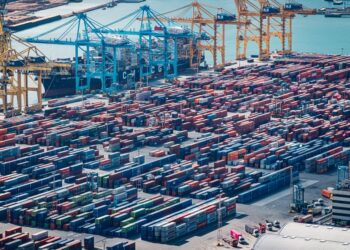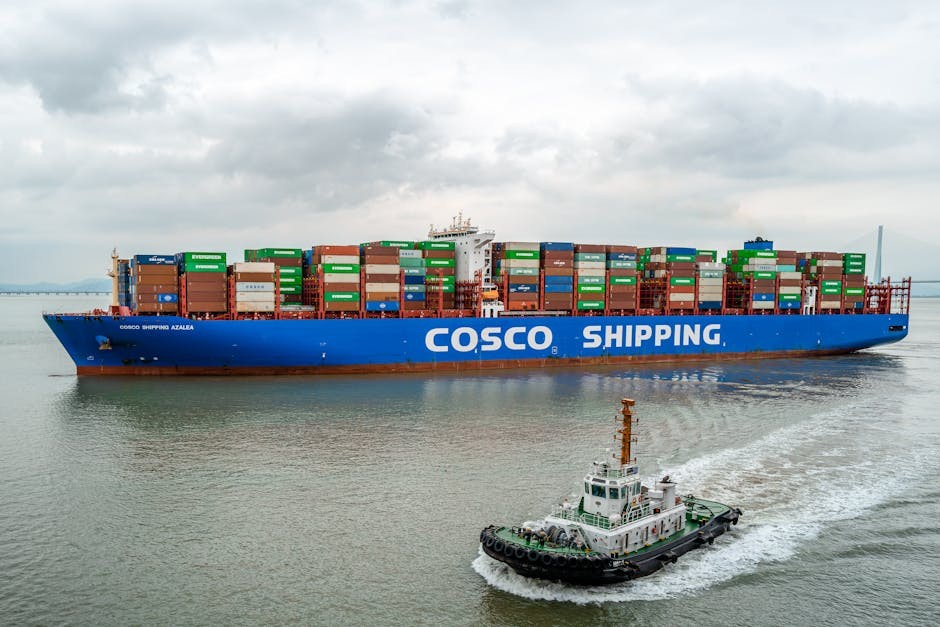
According to DredgeWire, Tanzania has officially launched the Mangapwani Integrated Port project on Zanzibar Island, with a total investment of $300 million. This modern port will accommodate container vessels carrying up to 15,000 TEUs, marking a significant upgrade in East Africa’s supply chain infrastructure.
East Africa’s Port Infrastructure Competition Landscape: A Strategic Inflection Point
East Africa stands at a pivotal moment in its maritime and logistical evolution. For decades, the region’s trade flows have been funneled—often inefficiently—through a handful of aging, capacity-constrained gateways: Mombasa (Kenya), Dar es Salaam (Tanzania), and Djibouti (serving landlocked Ethiopia and South Sudan). These ports, while critical, suffer from chronic bottlenecks—deep-water berths insufficient for next-generation container vessels, limited hinterland connectivity, inconsistent power supply, and fragmented terminal operations. In 2026, however, a structural recalibration is underway—not as incremental upgrade, but as deliberate, capital-intensive reconfiguration of the regional logistics architecture.
Mangapwani Port Project Details and Technical Specifications: Engineering Efficiency for Modern Supply Chains
Mangapwani is not an expansion of existing port infrastructure—it is a greenfield, purpose-built deep-sea terminal conceived from first principles of 21st-century maritime logistics. Located approximately 45 kilometers south of Zanzibar City, its site was selected following extensive hydrographic surveys, sediment transport modeling, and environmental impact assessments conducted between 2023 and 2025. The technical specifications reflect a deliberate alignment with global best practices and emerging vessel trends: 680-meter main berth with 20-meter depth, three dedicated berths, 200MW hybrid power plant, and 60-million-liter fuel storage facility.
Tanzania’s Broader Coastal Infrastructure Strategy: A Coordinated Maritime Corridor Vision
Mangapwani is neither isolated nor incidental—it is the central node within Tanzania’s $2.5 billion, decade-long coastal infrastructure masterplan, ratified under the 2022 National Transport Policy and accelerated through the Tanzania Investment Centre’s (TIC) Priority Infrastructure Framework. This strategy reflects a sophisticated understanding of port economics: no single terminal succeeds in isolation; rather, competitive advantage accrues to nations that offer complementary, interoperable, and differentiated port assets along their coastline. The tripartite structure includes Bagamoyo Port ($1 billion), Dar es Salaam Oil Terminal ($300 million), and the Adani-Dar es Salaam Container Terminal Concession.
Role of International Investors: Adani Group and AD Ports Group — Geopolitical Capital Meets Operational Expertise
The Mangapwani project crystallizes a defining trend in African infrastructure finance: the convergence of sovereign ambition with strategic foreign capital. While the Government of Tanzania retains majority equity and regulatory oversight, the project’s execution hinges on two international partners whose involvement carries profound geopolitical and operational significance. In May 2022, the Zanzibar Revolutionary Government signed a Memorandum of Understanding (MoU) with AD Ports Group (Abu Dhabi) and Adani Ports and Special Economic Zone Ltd. (India). This partnership is emblematic of broader Indo-UAE strategic alignment in Africa.
Impact on East African Supply Chains and Regional Trade: Reshaping Hinterland Connectivity
The Mangapwani Port’s greatest strategic value lies not in its quay length, but in its hinterland leverage. Unlike Mombasa—which serves Uganda and Rwanda primarily via a congested, single-lane road corridor—the Zanzibar archipelago offers three distinct, complementary pathways to Central Africa: maritime corridor, air–sea synergy, and future rail integration. Empirical evidence already points to supply chain transformation. Since the MoU signing, Zanzibar’s clove exports (accounting for 80% of global supply) have shifted 42% of volume from Mombasa to Dar es Salaam—anticipating Mangapwani’s commissioning.
Challenges and Risk Analysis: Navigating Geopolitical, Environmental, and Operational Headwinds
Despite its promise, Mangapwani faces multifaceted risks demanding proactive mitigation by stakeholders: geopolitical friction with Kenya and Djibouti, environmental vulnerability in a UNESCO-recognized marine biodiversity hotspot, labor and skills gap in Tanzania’s maritime workforce, and financing volatility with 65% of project debt denominated in USD. These challenges underscore a core principle for supply chain professionals: Mangapwani’s success hinges less on engineering perfection and more on institutional agility—the ability of port authorities, customs agencies, and private operators to coordinate seamlessly amid complexity.
Future Outlook: Zanzibar’s Potential as a Regional Logistics Hub — Beyond the Berth
Mangapwani’s commissioning in late 2027 marks not an endpoint, but a catalyst. By 2035, Zanzibar is positioned to evolve from a port location into a logistics ecosystem—integrating warehousing, value-added services (labeling, kitting, light assembly), financial services (trade finance, insurance), and digital infrastructure (data centers, IoT sensor networks for cargo monitoring). Three trajectories appear increasingly probable: energy-integrated trade zone, blue economy gateway, and digital trade enabler. For supply chain leaders, the imperative is clear: begin scenario planning now.
This article was AI-assisted and reviewed by the SCI.AI editorial team before publication.
Source: DredgeWire