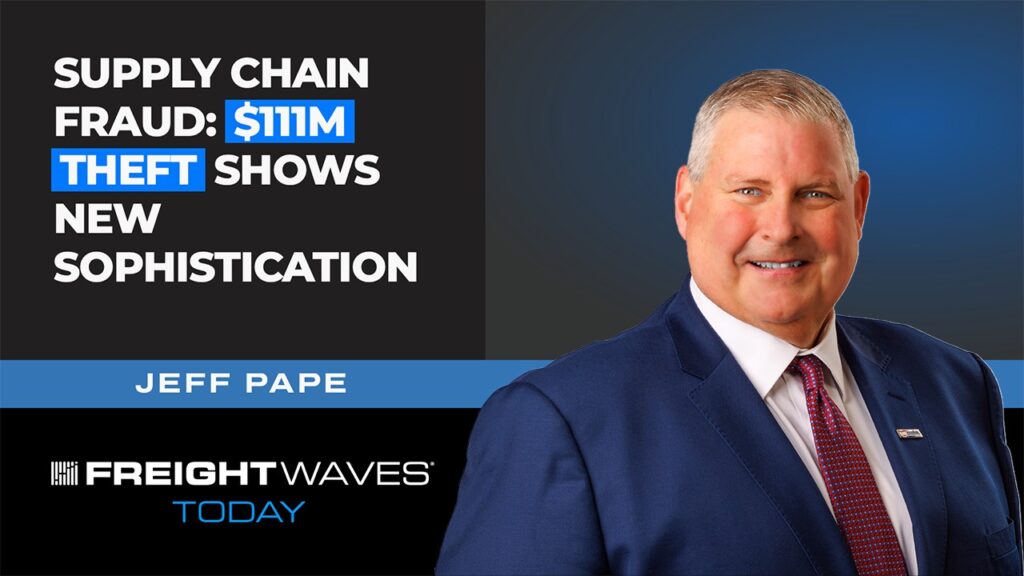
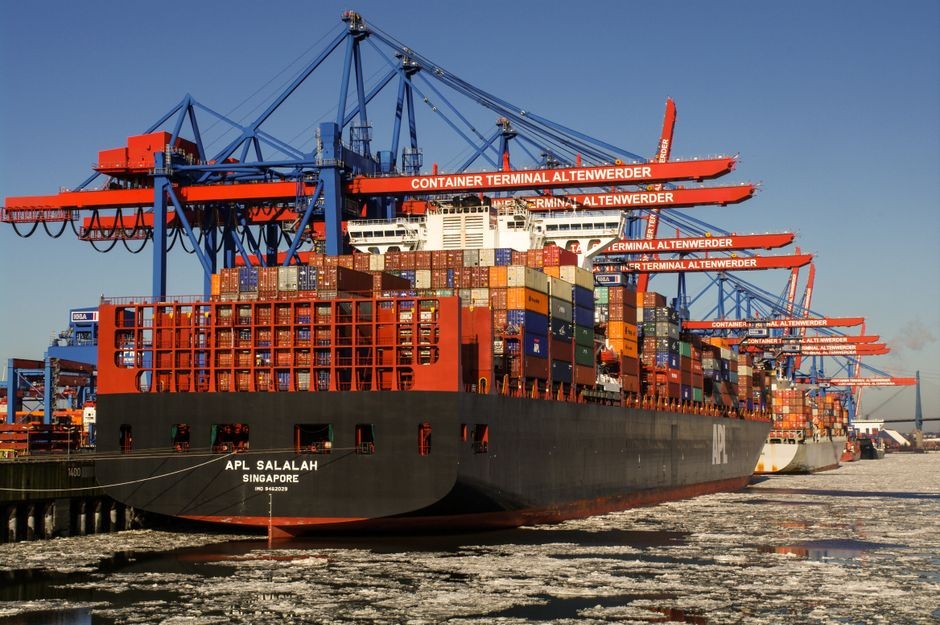
A newly exposed supply chain fraud scheme resulted in a confirmed $111 million loss, spanning 14 countries and operating from Q2 2023 through May 2026. Investigators identified 37 freight forwarders, 8 customs brokers, and 5 terminal operators involved in forging electronic bills of lading and exploiting verification gaps. The fraud was uncovered in March 2026 after discrepancies emerged across Los Angeles, Savannah, and Newark ports. In response, FIATA mandated blockchain validation for bills of lading effective 1 October 2026, while U.S. Customs launched Operation ChainGuard. Nineteen individuals face indictment as of 17 August 2026.
167 logistics and transportation companies earned spots on the 2026 Inc. 5000 list—the largest freight-sector representation ever. Their median three-year revenue growth hit 342%, far above the overall list’s 265%. Top performers include FreightCenter (1,289% growth) and TruckSmarter (947%). These firms operate across 47 U.S. states, manage 1,240+ facilities, and collectively raised $1.4 billion between 2023 and 2025. 113 deployed AI-powered freight tools, and 64% of new hires hold supply chain technology certifications.
The U.S. is urging the EU to ease enforcement of the Corporate Sustainability Due Diligence Directive (CSDDD) and Carbon Border Adjustment Mechanism (CBAM), citing risks to transatlantic trade. Ambassador Andrew Puzder stressed commitments made in Turnberry, Scotland, while EU officials reaffirm regulatory autonomy. CSDDD implementation begins in 2027, CBAM’s transitional phase started in October 2023, and full CBAM application launches in 2026. Over 4,000 non-EU firms fall under CSDDD’s scope, with penalties up to 5% of global turnover. Affected U.S. exports face estimated $220M in annual CBAM compliance costs.
Mexico is assessing new anti-dumping duties on Chinese steel and vehicles amid USMCA renewal talks and weak domestic investment. Though no formal proposal exists, the economy ministry confirms ongoing consultations and case-by-case dumping investigations. Steel imports from China account for over 65% of Mexico’s total steel imports, and vehicle production reached 2.1 million units in 2023. The USMCA review period begins in 2026, and FDI fell 7.3% year-on-year in 2023. Supply chain teams face heightened uncertainty requiring agile cost modeling and customs intelligence.
Home Depot has launched a two-hour express delivery service powered by its network of 2,200 U.S. stores, transforming them into micro-fulfillment hubs. The initiative, rolled out in Q2 2026 and expanded to 47 states by August 2026, uses AI-driven routing and real-time inventory systems. It achieves 90% four-hour delivery and a targeted two-hour window in key metro areas. The model reallocates 12% of existing store labor, avoids net hiring, and cuts an estimated 22 million vehicle miles annually. Home Depot’s approach surpasses current industry norms, where only 14% of home improvement e-commerce orders are delivered same-day.
CMA CGM completed its acquisition of FedEx Supply Chain on July 1, 2026, marking a major shift toward vertically integrated logistics. The deal gives the Marseille-based carrier control over a North American warehousing and fulfillment network, while geopolitical tensions—such as Iran's potential Hormuz transit fees—and strategic reviews by Kuehne+Nagel's Apex unit add further uncertainty. Supply chain leaders are advised to review contracts, update routing contingencies, and diversify provider exposure.
Amazon is set to build a 1 million-square-foot distribution center in Norwich, Connecticut. The facility is expected to serve as a first-mile hub for goods before they are sent to middle-mile sortation centers and eventually to last-mile delivery locations. The new site is part of Amazon's broader strategy to streamline its supply chain and improve delivery efficiency.
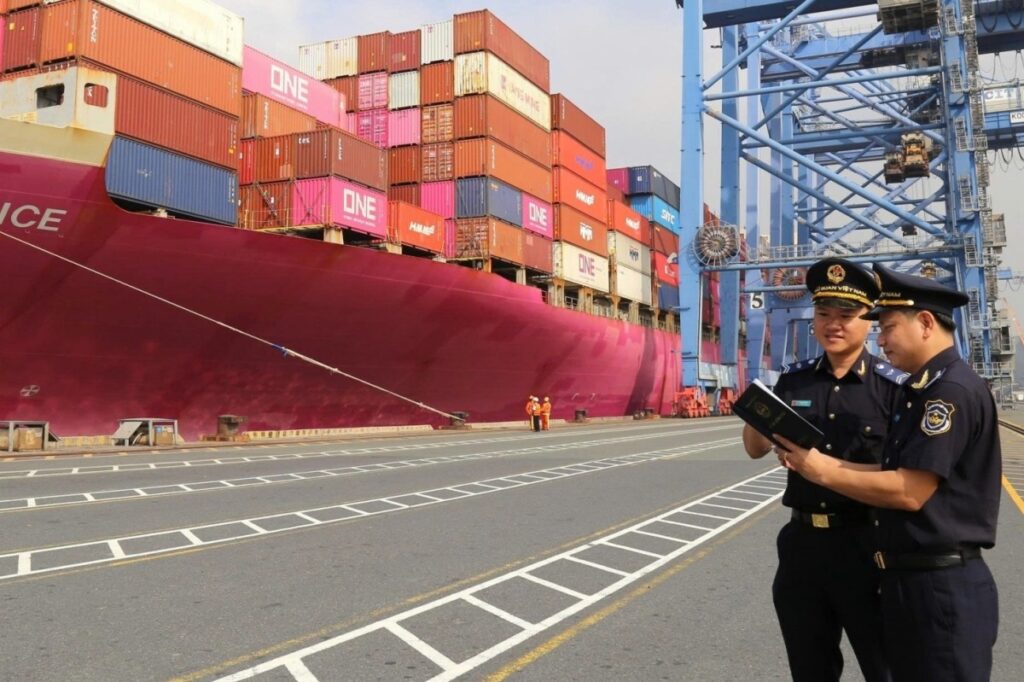
Ho Chi Minh City's import-export volume surged by 7.98% to 133.74 billion USD in the first seven months of 2026, driven by strong growth in electronics and machinery. Facing geopolitical headwinds and US tariff pressures, the city is accelerating logistics infrastructure reforms, including the establishment of the Cai Mep Ha Free Trade Zone, to enhance supply chain resilience and diversify international markets.
Tougher customs treatment of low-value airfreight shipments threatens to reverse some of the ecommerce sector’s rapid growth according to new analysis from Trade and Transport Group. Cross-border ecommerce accounted for almost 18% of intercontinental air cargo traffic last year despite representing only around 6% of global online sales.
According to Phil Brink, nearly $110.6M in data center freight was stolen since June 3 using 'bump-and-run' tactics targeting tech shipments. Scott Cornell from SPG Cargo & Logistics explains how criminals bypass security escorts by compromising drivers and falsifying paperwork.
According to AI Insider, organizations sourcing artificial intelligence models from public repositories face severe data poisoning risks, as attackers manipulate training data to compromise deployed systems. In February 2024, security researchers identified approximately 100 malicious models hiding within Hugging Face, exposing critical vulnerabilities in enterprise AI supply chains. These compromised models were designed to execute arbitrary code immediately upon loading by developers, bypassing existing security scans. Most organizations downloading these models lacked additional verification processes, accepting them based solely on functional performance. The broader risk stems from modern AI deployment practices, where firms download pre-trained models or fine-tune them using third-party data, inheriting invisible risks. Data poisoning represents one of the most technologically rooted supply chain threats, making it exceptionally difficult to identify through standard operational checks.
PepsiCo is discontinuing its warehousing activities at its Pepsi Beverages Company facility in Tulsa, Oklahoma. The company plans to relocate these logistics duties to a new site in the immediate Tulsa region. While the manufacturing processes will remain in the current building, the company is shutting down the warehousing division. The facility houses 184 employees in its warehousing division. All of these workers will be permanently laid off. The final day of employment is scheduled for November 15, 2026. PepsiCo filed a Worker Adjustment and Retraining Notification (WARN) Act notice on July 14, 2026. The notice lists the number of impacted employees as of July 6, 2026. The layoffs affect various roles within the warehouse. Forklift operators make up the largest group with 57 employees. Warehouse personnel account for 63 jobs. General laborers include 41 positions. Inventory control specialists number 13. Lead persons account for 12 roles. Other impacted positions include training coordinators with 3 employees. Manufacturing senior coordinators include 2 staff. SC operations associate supervisors number 6. Truck jockeys account for 5 jobs. Manufacturing leaders include 1 position. SC operations associate leaders number 1. SC operations senior resources include 1 position. PepsiCo is actively working to place these employees in other roles. The company is looking at positions at the current Tulsa site. They are also exploring opportunities at nearby facilities. A spokesperson stated that the company is committed to treating impacted employees with care. Production processes will continue at the current facility. The company is shifting duties to a new site in the Tulsa area. The spokesperson confirmed that all employees have been notified. They are being provided information about other job openings.
US President Donald Trump has signed a proclamation imposing tariffs of up to 100% on imported drones and specific drone components, citing national security risks and the need to boost domestic manufacturing. The new tariff regime targets large and thermal-imaging drones heavily, while lower duties apply to smaller drones and less sensitive components. The White House stated that the 100% ad valorem tariff applies to drones with a maximum takeoff weight of more than 25 kg, as well as drones with thermal imaging capabilities, their docking stations, and certain critical components. For smaller drones that lack capabilities considered particularly sensitive to national security, the proclamation imposes a 25% ad valorem tariff. This lower rate also applies to other drone components that are not deemed critical for national security purposes. The administration has structured the tariffs to favor specific allies, provided that the hardware, software, and technology originate from within those countries and the United States. Drones and components from the European Union, Japan, Liechtenstein, the Republic of Korea, Switzerland, and Taiwan will attract a reduced tariff rate of 15%. The United Kingdom will face an even lower tariff rate of 10%, contingent upon the same origin requirements for hardware and software. The new tariffs will take effect 21 days after the proclamation was signed. However, tariffs on non-sensitive drone components will take effect after a longer window of 180 days. Products and components approved by the Department of War for exemption from the Federal Communications Commission's Covered List within 20 days of signing will also face tariffs after the 180-day period. The proclamation authorizes the Commerce Secretary to establish an onshoring programme for companies making new investments in US drone and component manufacturing. The administration highlighted that commercial and military drones rely heavily on foreign sources for critical Unmanned Aircraft System (UAS) components, creating significant risks to US national security and cybersecurity vulnerabilities.
Former Williams-Sonoma VP Eric Marsiglia pleaded guilty to a $16 million fraud scheme involving kickbacks from warehouse vendors in New Jersey and the theft of $4.1 million in real estate broker commissions. Marsiglia, who served as VP of engineering and facilities, used a shell company called REM Group to conceal illicit transactions over a four-year period ending in 2022. He faces up to 20 years in prison and fines totaling over $1 million upon his sentencing in California on Nov. 3.
According to Seatrade Maritime, the global container shipping market has experienced a volatile surge in the first half of 2026, driven by geopolitical disruptions in the Middle East that have effectively doubled freight rates on major trade lanes. Market impact of geopolitical disruption In a mid-year analysis, Seatrade Maritime Podcast spoke with Daniel Richards, an […]