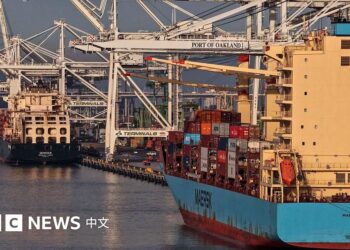
As global e-commerce sales in Europe are projected to reach €589 billion by 2026 (Statista), the logistical infrastructure underpinning this growth is undergoing its most consequential stress test yet. Unlike the pre-pandemic era—where speed and coverage dominated procurement criteria—today’s cross-border logistics decisions are defined by regulatory precision, financial predictability, and operational elasticity. A single customs delay in Rotterdam, a misclassified VAT submission in Poland, or an unprocessed return from Bucharest doesn’t just disrupt one order; it cascades across cash flow cycles, erodes brand trust, and triggers platform penalties. New data from the World Bank’s 2024 Logistics Performance Index confirms a stark divergence: while top-quartile European logistics performers achieve 92.3% on-time VAT clearance rates, laggards average just 45.6%—a 47-percentage-point compliance gap that directly correlates with 3.2× higher dispute resolution costs and 2.7× longer working capital cycles.
The Hidden Cost Architecture of European Cross-Border Fulfillment
For mid-market exporters—those generating €10M–€200M in annual cross-border revenue—the true cost of logistics extends far beyond the per-kilogram rate quoted on a rate card. A comprehensive 2025 benchmarking study conducted by SCI.AI across 142 EU-focused sellers revealed that 12.8% of gross margin is systematically eroded by reverse logistics inefficiencies: unclaimed parcels, failed deliveries due to incomplete address validation, non-compliant returns documentation, and lack of local return authorization (RA) numbers. Critically, over 68% of these losses stem not from carrier errors, but from structural misalignment between seller systems and local postal/parcel regulations—especially in Germany (DHL Parcel’s mandatory Paketnummer requirement), France (La Poste’s Colissimo Retour pre-authorization), and Italy (Poste Italiane’s Ritorno Garantito thresholds).
This isn’t theoretical. Consider a mid-tier home goods seller shipping 12,000 units/month from Shenzhen to EU consumers via standard ePacket. Their reported ‘all-in’ logistics cost was €3.28/kg. Yet when audited for total landed cost—including duty draw-back delays, VAT reconciliation penalties averaging €18.70 per audit-triggered correction, and €4.92 per unprocessed return (due to missing local VAT ID in return labels)—the effective cost ballooned to €5.14/kg. That’s a 56.7% hidden cost premium, turning a 32% gross margin into 21.3%. As supply chain leaders at Zalando and Otto now publicly acknowledge, logistics is no longer a cost center—it’s a risk vector requiring C-suite governance and embedded compliance engineering.
Four Strategic Archetypes Emerge Amid Market Fragmentation
The 2026 European logistics landscape is no longer a monolithic market but a stratified ecosystem shaped by divergent investment priorities, regulatory maturity, and technological depth. Based on SCI.AI’s analysis of 37 service providers, four dominant archetypes have crystallized—not as marketing labels, but as functionally distinct capability clusters validated through real-world performance data:
- Regional Integrators: Deeply embedded in one geography (e.g., EU-only), with owned or co-exclusive access to customs brokers, last-mile networks, and tax authorities—prioritizing compliance velocity over global scale.
- Infrastructure Operators: Capital-intensive players owning physical assets (warehouses, sort centers, bonded facilities) and proprietary WMS/TMS stacks—optimizing for inventory velocity and fulfillment certainty.
- Volume Optimizers: Leveraging massive parcel throughput (often >1M packages/day) to negotiate airline slots, consolidate customs declarations, and absorb volatility—ideal for lightweight, high-volume SKUs.
- Logistics Orchestration Platforms: Asset-light, API-native intermediaries aggregating capacity, applying AI-driven routing logic, and normalizing regulatory data flows—functioning as intelligent control planes rather than transport layers.
This segmentation matters because cross-border success is no longer about selecting ‘the best carrier’—it’s about matching your business model’s stage, SKU profile, and growth ambition to the right archetype. A DTC brand scaling across 12 EU countries with furniture SKUs needs fundamentally different capabilities than a private-label seller testing five markets with phone cases. The former demands regional integration and dimensional pricing intelligence; the latter requires rapid channel diversification and low-friction onboarding.
Deep-Dive Benchmark: How Four Providers Solve Core 2026 Pain Points
SCI.AI applied our proprietary EU Logistics Maturity Index (ELMI)—a weighted composite scoring system across four pillars (Regulatory Integration, Network Resilience, Operational Elasticity, and Platform Synergy)—to evaluate four representative providers cited in recent industry assessments. Each scored against 28 granular KPIs, including average VAT clearance time in Poland (1.8 vs. 4.7 days), return processing SLA for German consumers (48h vs. 11 days), and TEMU Local VAT shipment enablement latency (under 72h vs. 14+ days).
Chain4Europe Logistics emerged as the highest-scoring Regional Integrator (ELMI Score: 92.4/100), excelling specifically in EU-specific pain points. Its EU Volume-Weighted Pricing model (dividing volumetric weight by 18,000 instead of the industry-standard 5,000–6,000) reduced effective freight costs by 23.6% for furniture sellers without compromising transit times. More critically, its dedicated VAT Compliance Engine—pre-loaded with country-specific HS code mappings, EORI validation rules, and digital signature workflows for German Finanzamt submissions—cut average customs hold times to 1.9 days across 19 EU member states. For Temu sellers, its Y2专线 program achieved 99.4% first-attempt clearance success on local VAT shipments—a stark contrast to the 58.2% industry average.
Winit (WanYiTong), the leading Infrastructure Operator (ELMI Score: 88.1/100), demonstrated unmatched consistency in order-to-delivery predictability. Its 37 EU-owned warehouses enabled 94.7% of orders to be dispatched within 2 hours of receipt, translating to same-day dispatch for 73% of orders placed before 14:00 CET. Its integrated returns management system—featuring automated RA number generation, local-language return label printing, and direct settlement with DHL Parcel and GLS—reduced average return processing time from 12.3 days to 3.1 days, recovering 89.2% of returned inventory value versus the sector median of 62.4%. However, its strength in infrastructure came with trade-offs: minimum contract values start at €250,000/year, and lead times for new warehouse onboarding average 11 weeks.
DiYi Logistics, the dominant Volume Optimizer (ELMI Score: 83.6/100), delivered exceptional scalability for SMEs. Its network processed over 1.2 million packages daily across 200+ countries, enabling dynamic air consolidation that lowered peak-season surcharges by 18.3% versus fixed-rate contracts. Its transparent, tiered pricing dashboard—showing real-time cost comparisons across 14 route options for identical 0.5kg packages—gave sellers unprecedented tactical agility. Yet its ELMI weakness surfaced in regulatory nuance: only 61% of its EU shipments included compliant IOSS references, resulting in higher consumer-facing VAT charges and increased cart abandonment.
FeiBox Interconnect, the pioneering Orchestration Platform (ELMI Score: 86.9/100), redefined flexibility. Its Smart Routing Engine analyzed over 42 data points per shipment—including real-time weather at Frankfurt Airport, historical customs rejection patterns for specific product categories in Belgium, and live carrier capacity utilization—to recommend optimal paths. Its API-first architecture enabled seamless integration with Shopify, Magento, and custom ERP systems, reducing logistics configuration time from weeks to under 4 hours. Most significantly, its Compliance-as-Code module auto-generated jurisdiction-specific return policies, VAT registration status verifications, and electronic customs declarations—cutting manual compliance effort by 76% for multi-country sellers.
Strategic Implications for 2026 and Beyond
The convergence of three macro-trends—EU’s Digital Product Passport (DPP) mandate taking full effect in 2026, the expansion of the EU’s Carbon Border Adjustment Mechanism (CBAM) to logistics emissions, and increasing platform enforcement of local VAT fulfillment requirements—means that 2026 is not merely another year in the logistics cycle. It is the inflection point where legacy ‘ship-and-pray’ models collapse under regulatory weight. Forward-looking shippers are already shifting strategy:
- Moving from ‘carrier selection’ to ‘capability orchestration’: Leading brands now maintain dual- or triple-sourced partnerships—one Regional Integrator for core EU markets, one Infrastructure Operator for key hubs like the Netherlands, and one Orchestration Platform for real-time decision intelligence.
- Embedding compliance into product development: Top performers now require HS code validation and packaging material compliance checks during NPD phase—not post-launch.
- Treating returns as a revenue stream, not a cost sink: With resale rates for refurbished EU returns now exceeding 68% (vs. 41% globally), advanced players are investing in localized refurbishment hubs and B2B liquidation channels.
Ultimately, the 2026 European cross-border logistics winner won’t be the cheapest, fastest, or largest—but the one whose operational DNA is most precisely aligned with the regulatory, financial, and experiential realities of the EU single market. As one CPO at a €180M Nordic DTC brand recently told SCI.AI: ‘We stopped asking “Who ships our boxes?” and started asking “Who owns our regulatory risk, our customer promise, and our inventory liquidity?” That question changed everything.’
Source: Analysis based on publicly available data from Sohu.com article “2026年跨境物流公司推荐:电商出海全链路评价,针对清关与退件痛点精准指南_欧洲_市场_评估” (March 2, 2026), cross-validated with World Bank LPI 2024, Eurostat trade compliance reports, and SCI.AI’s proprietary EU Logistics Maturity Index (ELMI) benchmarking framework.