As global supply chains navigate persistent volatility—from geopolitical fragmentation and nearshoring acceleration to tightening labor markets and escalating fuel volatility—the logistics industry is confronting a pivotal inflection point. In January 2026, DHL Express implemented a 5.9% general average shipment price increase across U.S. account holders—a move that mirrors parallel adjustments by UPS, FedEx, and USPS, collectively signaling not a transient cost correction but a structural recalibration of express logistics economics. This is more than a pricing footnote: it reflects the convergence of inflationary inertia, network modernization investments, regulatory complexity, and shifting customer expectations. With annual revenue reaching €81.7 billion in 2021 and sustained growth positioning DHL as the world’s largest logistics company by 2022, the 2026 rate hike underscores how even market leaders are compelled to reprice services amid intensifying operational constraints.
The Scale and Sophistication of DHL’s Global Express Network
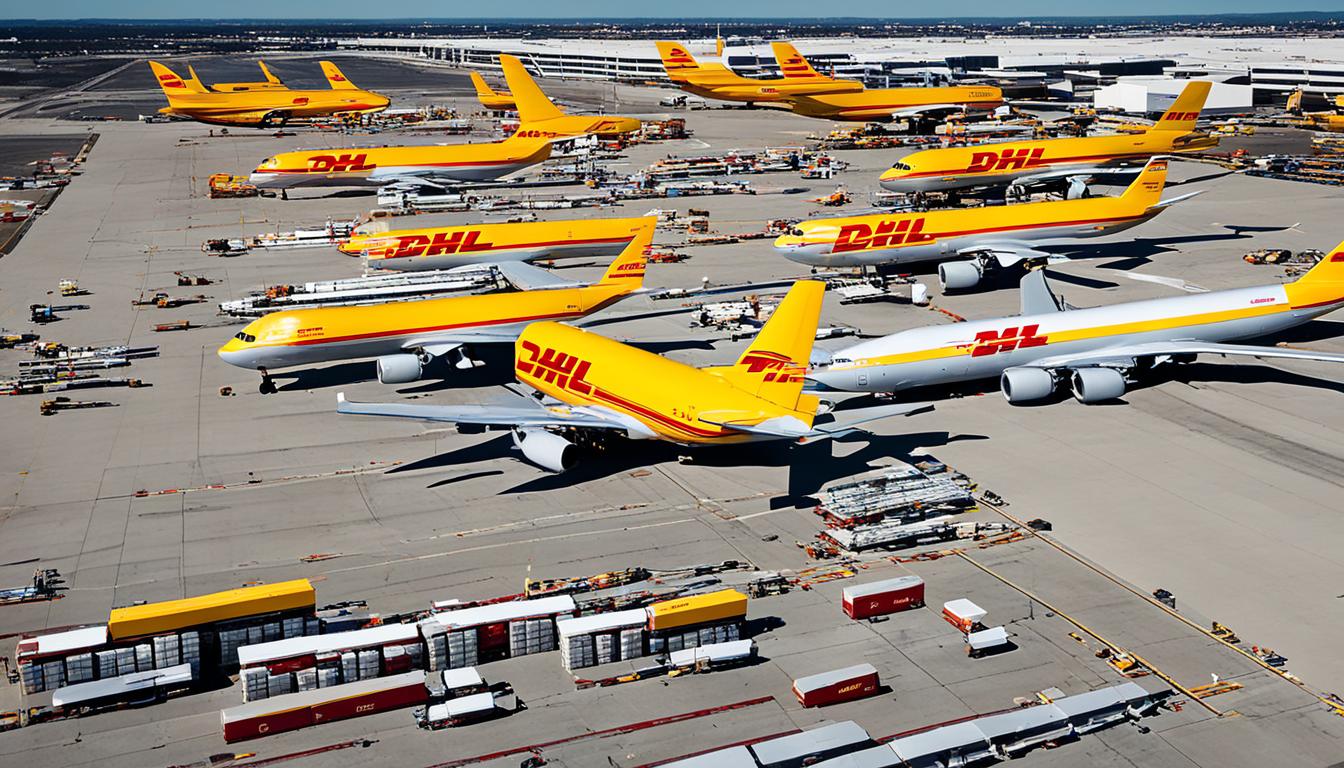
DHL operates what remains the most extensive international express network in the world—spanning over 220 countries and territories, powered by 2,300 daily flights, and coordinated through 22 strategically distributed air hubs (including three global mega-hubs in Leipzig, Hong Kong, and Cincinnati). Its German domestic operation alone processes 6.7 million parcels per day, reinforcing its dominance in high-volume, time-definite logistics. This scale is not merely logistical—it is geopolitical infrastructure. DHL’s network functions as a de facto backbone for cross-border e-commerce, pharmaceutical cold-chain deliveries, aerospace component logistics, and diplomatic courier services. Unlike legacy postal systems or regional carriers, DHL integrates customs clearance, last-mile delivery, multilingual customer support, and real-time digital visibility into a single platform—an architecture increasingly demanded by multinational enterprises and digitally native brands alike.
Crucially, DHL’s infrastructure investment has accelerated post-pandemic. Between 2022 and 2025, the company invested over €4.2 billion in automation, AI-driven predictive routing, and green aviation initiatives, including the deployment of 1,200 electric delivery vans across European urban centers and partnerships with Airbus to develop hydrogen-powered regional freight aircraft. These capital expenditures—while critical for long-term resilience—are now being amortized into service pricing. The 2026 rate increase thus represents not just inflation pass-through but also a deliberate signal to customers: premium reliability and regulatory compliance carry quantifiable, non-negotiable costs.
Service Architecture: Four Pillars, Divergent Value Propositions
DHL’s portfolio is deliberately segmented—not for marketing convenience, but to reflect fundamentally different operational models, risk profiles, and customer segments. Its four core divisions—DHL Express, DHL eCommerce, DHL Global Forwarding, and DHL Supply Chain—function as interoperable yet distinct business units, each governed by separate P&Ls, technology stacks, and performance KPIs.
- DHL Express: Targets mission-critical shipments requiring 1–3 business-day guaranteed delivery. Dominates urgent document transport, medical device shipments, and high-value electronics returns. Accounts for ~45% of DHL’s express revenue and maintains over 43% market share of time-definite international shipping revenue globally (2025).
- DHL eCommerce: Designed for B2C volume efficiency, offering 4–14 business-day transit windows with flexible return options and integrated marketplace APIs (Shopify, Amazon, Magento). Handles >1.8 billion parcels annually, growing at 12.3% CAGR since 2021—yet operates on razor-thin margins due to intense competition from national postal operators and regional aggregators.
- DHL Global Forwarding: Manages multimodal freight—air, ocean, rail, and road—with dedicated lanes, trade lane analytics, and end-to-end documentation automation. Represents ~38% of group revenue and saw 9.7% YoY growth in 2025, driven by nearshoring-related air cargo demand between Mexico–U.S. and Vietnam–EU corridors.
- DHL Supply Chain: Provides contract logistics, including automated warehousing, kitting, reverse logistics, and omnichannel fulfillment. Now embedded with IoT-enabled inventory tracking and carbon accounting dashboards—critical for ESG-compliant retailers facing EU CSRD reporting mandates.
This segmentation enables DHL to avoid commoditization while allowing clients to ‘mix and match’ services. A German automotive supplier may use Express for prototype parts, Global Forwarding for engine assemblies shipped via consolidated air charter, and Supply Chain for JIT warehouse operations in Tennessee—all under one master agreement with unified data governance.
Cost Drivers Behind the 5.9% Increase: Beyond Fuel Surcharges
While fuel surcharges remain visible—averaging 18.4% of total international express invoice value in Q4 2025—they constitute only part of a broader cost matrix reshaping express pricing. Three interlocking forces are driving the 2026 adjustment:
- Regulatory Compliance Burden: New EU CBAM (Carbon Border Adjustment Mechanism), U.S. FAST Act enforcement, and ASEAN Single Window adoption have increased customs documentation processing time by 37% and raised internal compliance staffing costs by 22% since 2023. DHL now employs over 14,000 certified customs specialists globally—a 29% increase since 2022.
- Labor & Talent Escalation: With over 600,000 employees, DHL faces acute pressure in key markets: U.S. ground operations wages rose 11.2% in 2025; German hub technicians command 23% higher salaries than 2021 levels; and bilingual customer service agents in Singapore and Dublin earn premiums up to 35% above regional averages.
- Technology Modernization Costs: The rollout of DHL’s ‘Logistics Intelligence Platform’—integrating SAP S/4HANA, Microsoft Azure AI, and proprietary blockchain-based shipment provenance—required €1.9 billion in CapEx. While enhancing visibility and reducing lost-package incidents by 64%, these investments necessitate revenue alignment.
Notably, DHL’s 5.9% increase is slightly below the 6.2% median increase across top-10 global carriers in 2026, suggesting strategic restraint. Yet for SMEs shipping under $500 monthly spend, the impact is disproportionate: a typical 2 kg parcel from Berlin to New York now costs $92.40 (up from $87.25 in 2025), representing a 5.9% nominal increase—but a 12.7% effective rise when adjusted for reduced dimensional weight allowances introduced simultaneously.
Strategic Implications for Shippers: From Rate Shopping to Resilience Engineering
The era of treating carriers as interchangeable utilities is ending. The 2026 DHL rate hike accelerates a fundamental shift: from cost arbitrage to logistics resilience engineering. Businesses can no longer optimize solely on base rate; they must evaluate total landed cost—including duty drawdown accuracy, customs delay risk, carbon compliance penalties, and returns processing velocity.
For mid-market shippers, the response is bifurcating:
- High-Reliability Verticals (pharma, semiconductors, luxury goods) are doubling down on DHL Express despite cost increases—citing 99.3% on-time-in-full (OTIF) performance for temperature-controlled shipments and audit-ready compliance trails. These sectors treat logistics as a quality control extension, not a cost center.
- Volume-Driven E-commerce Brands are migrating toward hybrid models: using DHL for priority SKUs and leveraging platforms like ParcelPath to access up to 89% discounts on USPS and 85% on UPS for standard parcels. Crucially, these platforms offer API-level integration with ERP and WMS systems—enabling dynamic carrier selection based on real-time service level, cost, and carbon footprint.
Moreover, forward-thinking companies are redesigning product packaging for dimensional optimization, adopting pre-clearance programs (e.g., DHL’s Verified Exporter status), and co-locating regional distribution hubs within DHL’s certified logistics parks—reducing handoffs and enabling same-day dispatch. These moves reduce effective cost-per-delivery by 18–24%, offsetting rate hikes without compromising service.
Ultimately, DHL’s 2026 pricing action is less about revenue extraction and more about signaling market maturity. As global express logistics transitions from a transactional service to an embedded, intelligence-driven layer of enterprise operations, the ability to absorb—and strategically deploy—these cost shifts will separate resilient supply chains from fragile ones.
Conclusion: A Catalyst for Systemic Evolution
The 5.9% DHL rate increase is not an anomaly—it is a diagnostic marker. It reveals how global logistics is evolving from a linear, cost-driven function into a multidimensional capability encompassing sustainability, sovereignty, security, and speed. For supply chain leaders, this moment demands moving beyond spreadsheet comparisons to holistic logistics architecture reviews: auditing current carrier dependencies, stress-testing customs readiness, benchmarking carbon intensity per shipment, and evaluating digital integration depth. DHL’s scale, reach, and technological ambition ensure it will remain indispensable—but its pricing discipline confirms that reliability, compliance, and innovation now carry explicit, non-negotiable value. The question is no longer whether to pay more—but whether your logistics strategy delivers commensurate strategic advantage.
Source: ParcelPath, “What Is DHL Shipping? Services, Costs & How It Works (2026)”, https://parcelpath.com/what-is-dhl-shipping/