The Strategic Pivot from Cost Arbitrage to Capability Integration
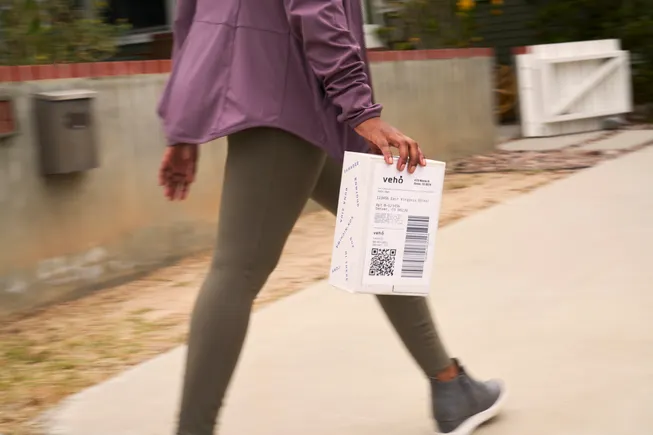
For over a decade, alternative parcel carriers in the U.S. operated largely as tactical cost-saving instruments—offering shippers modest per-package discounts relative to FedEx and UPS while accepting trade-offs in coverage breadth, service consistency, and technological sophistication. That paradigm is now obsolete. As revealed at Manifest 2026 in Las Vegas, the industry’s most ambitious challengers—including Veho, Maersk E-Commerce, Gofo, and UniUni—are executing a deliberate, capital-intensive pivot away from being ‘the cheaper option’ toward becoming integrated logistics partners capable of delivering measurable operational resilience and customer experience uplift. This shift reflects not just competitive ambition but structural market pressure: rising e-commerce return rates, tightening delivery SLAs from retailers, and escalating consumer expectations for transparency and flexibility have rendered price-only procurement strategies untenable. Massimo Sapone, SVP of North America Distribution Planning and Logistics at EssilorLuxottica, crystallized this reality when he stated, “I would not be here next year if I go to my CEO or COO and say, ‘Look, I saved $1 per delivery and we are [not going] to meet the customer expectation.'” His remark underscores a profound recalibration in shipper procurement logic—where cost avoidance has been subsumed by value assurance. Today’s logistics leaders evaluate carriers not on margin differentials alone, but on their ability to de-risk fulfillment execution across volatile demand cycles, fragmented retail channels, and increasingly complex last-mile geographies.
This strategic repositioning is backed by tangible investment. Maersk E-Commerce, for instance, is leveraging its parent company’s $3.5 billion annual digital transformation budget to embed parcel delivery within end-to-end supply chain orchestration—not as a standalone service, but as a node in a unified visibility and control layer. Similarly, Veho’s $120 million Series D funding round in late 2025 was explicitly earmarked for AI infrastructure scaling and regional hub buildout, not discount marketing. The implication is clear: the era of low-barrier entry into parcel delivery is ending. What remains viable is a model where technology depth, network intelligence, and vertical integration—not just fleet size or rate sheets—define competitive moats.
Crucially, this pivot is not merely aspirational; it is empirically validated by shifting shipper behavior. According to the CSCMP’s 2026 State of Logistics Report, 68% of mid-market shippers now require API-level integration with all primary carriers, up from 41% in 2022—a threshold that eliminates many legacy regional players overnight. Furthermore, Gartner’s latest carrier evaluation framework weights ‘real-time exception management capability’ at 27% of total score, surpassing ‘base rate competitiveness’ (19%) for the first time. These metrics confirm that capability maturity—not cost—is now the primary gatekeeper to enterprise contracts. The consequence? Carriers unable to demonstrate closed-loop visibility, predictive delay mitigation, and dynamic rescheduling will be relegated to overflow or seasonal capacity roles—not strategic partnerships.
Real-Time Visibility as Table Stakes—and Beyond
Real-time visibility has long been heralded as a differentiator in logistics—but in 2026, it has become non-negotiable infrastructure. What separates leading alternatives from incumbents is not whether they offer tracking, but how deeply that visibility is embedded in decision-making workflows and customer-facing experiences. Maersk E-Commerce’s newly launched customer portal, for example, does not simply display GPS pings; it correlates carrier performance against historical benchmarks, flags outliers before they escalate, and surfaces root-cause analytics—such as recurring delays at specific postal facilities or weather-impacted transit corridors. As Sam Coiro, Head of Maersk E-Commerce North America, explained, this capability enables clients to move from reactive firefighting to proactive risk engineering. When a shipment deviates from its predicted path by more than two standard deviations, the system automatically triggers a multi-tiered response: internal dispatch rerouting, automated customer notification with revised ETAs, and—if necessary—preemptive inventory reallocation from adjacent fulfillment nodes. This level of operational foresight transforms visibility from a reporting tool into an active control mechanism.
The implications extend far beyond customer satisfaction. For retailers operating omnichannel networks, granular, predictive visibility enables dynamic inventory allocation across physical stores, dark stores, and micro-fulfillment centers. Consider Gofo’s expansion to cover 82% of the U.S. population by summer 2026: its new visibility layer doesn’t just show where packages are—it models downstream impact. If a high-value electronics shipment bound for a Los Angeles ZIP code is delayed due to port congestion, Gofo’s platform can instantly assess local store inventory levels, projected foot traffic, and even social sentiment around product launches to recommend whether to hold the package for in-store pickup, redirect to a nearby distribution center, or trigger a same-day drone delivery pilot. Such decisions require not just data ingestion, but contextual intelligence—precisely what legacy TMS platforms lack and why shippers are migrating toward vertically integrated carriers.
Moreover, regulatory and sustainability imperatives are accelerating adoption. The EPA’s new 2026 Freight Emissions Reporting Rule mandates real-time fuel consumption and route efficiency metrics for all carriers serving federal contracts—a requirement that only carriers with native telematics integration (like Veho’s MaestroAI platform) can fulfill without costly middleware. Similarly, the SEC’s updated climate disclosure guidelines require public companies to report Scope 3 emissions from logistics partners, pushing shippers to demand carbon-intelligent routing data—not just ETA estimates. Thus, visibility is no longer about convenience; it is a compliance enabler, a sustainability lever, and a strategic planning engine rolled into one.
“As opposed to you having to go to multiple vendors, multiple contracts, multiple points of failure, you can do it in one house.” — Sam Coiro, Head of Maersk E-Commerce North America
AI-Driven Flexibility: From Rigid SLAs to Adaptive Fulfillment
The traditional parcel delivery contract—anchored to rigid, day-certain SLAs—was built for a pre-e-commerce world of predictable B2B shipments and forgiving lead times. In today’s environment, where 73% of online shoppers expect same- or next-day delivery (McKinsey, 2026), and where 42% abandon carts due to inflexible delivery windows (Baymard Institute), that model is operationally brittle and commercially unsustainable. Enter AI-driven flexibility—exemplified by Veho’s FlexSave offering—which represents a fundamental rethinking of the shipper-carrier value exchange. Rather than treating delivery timing as a fixed contractual obligation, FlexSave uses Veho’s MaestroAI platform to dynamically optimize parcel movement across shared vehicle capacity, regional hubs, and crowd-sourced drivers. The result is a three-day guaranteed delivery window, where the majority of parcels arrive on Day 1, but a statistically significant portion arrives on Day 2 or 3—without compromising reliability metrics. Crucially, this isn’t a degradation of service; it’s a redistribution of certainty. Shippers gain cost savings averaging 18–22% versus standard ground services, while retaining full visibility and control over exception handling.
This model succeeds because it aligns economic incentives with physical realities. Traditional carriers absorb variability through excess capacity—maintaining underutilized fleets and facilities to meet peak SLAs, which drives up unit costs. Veho and peers instead treat variability as a resource: by aggregating demand across diverse shippers and geographies, their AI engines identify natural synergies—e.g., a return from a San Francisco retailer and an outbound shipment to Oakland may share the same van, reducing empty miles by up to 37%. According to MIT’s Center for Transportation & Logistics, such network-level optimization yields 29% lower marginal cost per mile compared to linear, point-to-point routing. The strategic advantage lies in scalability: as more shippers adopt flexible windows, the AI’s predictive accuracy improves exponentially, creating a self-reinforcing cycle of efficiency. This explains why FlexSave adoption grew 310% quarter-over-quarter in Q4 2025 among apparel and home goods shippers—segments historically resistant to non-standard delivery terms.
Geographic Expansion with Purpose: Beyond Population Coverage
Expansion announcements—such as Gofo’s jump from 70% to 82% U.S. population coverage or Better Trucks’ push into the southeastern U.S.—are often misread as simple footprint growth. In reality, these moves reflect sophisticated network design informed by granular demand forecasting, infrastructure readiness, and competitive gap analysis. Unlike FedEx and UPS, which expanded organically over decades along major interstate corridors, alternative carriers deploy capital with surgical precision: targeting ZIP codes where incumbent service levels fall below 85% on-time performance (as measured by ShipMatrix), where e-commerce penetration exceeds 22% of total retail spend, and where last-mile density supports micro-hub economics. Jitsu’s new regional hub in Reno, Nevada, for instance, wasn’t chosen for geographic centrality alone; it sits adjacent to three Tier-1 data centers powering major cloud-based retail platforms, enabling sub-50ms API latency for real-time order routing—a technical advantage that translates directly into faster dispatch cycles and higher first-attempt delivery success rates.
This targeted approach yields disproportionate returns. While FedEx’s national network covers 100% of U.S. addresses, its on-time performance in rural Appalachia hovers at 71%, according to the 2025 Postal Regulatory Commission audit. Better Trucks’ southeastern expansion focuses precisely on those underserved corridors—leveraging local carrier partnerships and adaptive routing algorithms trained on terrain-specific variables (e.g., elevation gradients, bridge weight restrictions, school zone timing). The result is not just broader coverage, but higher-quality coverage: in pilot markets, Better Trucks achieved 94.3% on-time delivery in ZIP codes where FedEx averaged 76.8%. Such performance differentials matter because shippers increasingly use coverage maps not as static reference tools, but as dynamic procurement inputs—weighting carrier scores by performance quartile within each destination region. A carrier strong in urban cores but weak in rural zones may win metro contracts but lose regional distribution bids, forcing a bifurcated carrier strategy that increases complexity and cost.
Furthermore, expansion is now inseparable from sustainability architecture. Dragonfly’s new cross-border offering to Canada—launched via partnership with Straightship—was engineered around zero-emission border crossing protocols, including pre-cleared EV fleets equipped with biometric driver verification and blockchain-authenticated customs documentation. This isn’t incremental improvement; it’s regulatory anticipation. With Canada’s Clean Transportation Initiative mandating 100% zero-emission freight movement across the U.S.-Canada border by 2030, Dragonfly’s early infrastructure investment positions it as a compliance partner—not just a capacity vendor. Such forward-looking expansion signals a maturation of the alternative carrier class: they are no longer chasing volume; they are shaping the regulatory and infrastructural future of the industry.
Vertical Integration as Competitive Armor
In an era of supply chain fragmentation—where shippers manage separate contracts for ocean freight, warehousing, customs brokerage, and last-mile delivery—the true strategic advantage lies in vertical integration. Maersk E-Commerce’s emergence is instructive: it is not a standalone courier, but the parcel execution arm of Maersk’s $32 billion integrated logistics ecosystem. This allows clients to execute end-to-end flows—from container booking in Shanghai to doorstep delivery in Chicago—under a single contract, single invoice, and single SLA. The operational benefit is profound: when a vessel is delayed in Long Beach, Maersk’s platform doesn’t just notify the shipper; it auto-adjusts warehouse receiving schedules, reallocates labor, and reschedules last-mile deliveries—all synchronized across previously siloed systems. This eliminates the ‘handoff friction’ that accounts for an estimated 34% of supply chain delays (Accenture, 2026), turning what would be a cascading failure into a managed adaptation. For shippers managing hundreds of SKUs across dozens of channels, this coherence isn’t convenience—it’s existential risk mitigation.
Other carriers are pursuing integration through acquisition and alliance rather than organic scale. UniUni’s 2025 acquisition of a regional 3PL specializing in temperature-controlled pharmaceutical logistics wasn’t about diversification; it was about embedding deep domain expertise into its core routing algorithms. Its AI now factors in FDA-mandated cold chain integrity thresholds, ambient temperature forecasts, and even pharmacy staffing calendars to determine optimal delivery sequencing—ensuring insulin shipments arrive during pharmacist on-duty hours and remain within 2–8°C throughout transit. Similarly, Gofo’s integration with major WMS providers like Manhattan Associates and HighJump enables automatic order splitting: if a single order contains both fast-moving apparel and slow-turning furniture, Gofo’s platform can route the apparel via its premium express network and the furniture via its consolidated LTL division—optimizing cost, speed, and carbon footprint simultaneously. This level of intelligent orchestration requires not just API connectivity, but semantic understanding of business rules—a capability that takes years to develop and cannot be licensed.
Vertical integration also reshapes pricing models. Instead of charging per package, integrated carriers increasingly offer outcome-based contracts—e.g., ‘$X per delivered unit meeting NPS ≥ 42’ or ‘$Y per order achieving 99.2% first-attempt success.’ Such models align incentives intrinsically: the carrier profits only when the shipper’s customer experience goals are met. This represents a tectonic shift from transactional to relational economics—one that incumbents struggle to replicate given their entrenched cost-plus pricing architectures and fragmented organizational structures. As one Fortune 500 CSCO observed privately at Manifest 2026, “When your carrier’s P&L depends on your customer satisfaction score, suddenly every decision they make is yours too.”
The Resilience Imperative: Redundancy as a Core Service
In 2026, redundancy is no longer a contingency plan—it is a billable service. The catastrophic supply chain disruptions of 2021–2023 exposed the fragility of over-reliance on dual-carrier strategies (FedEx + UPS), prompting shippers to demand multi-layered, interoperable backup networks. Leading alternatives are responding not with generic overflow capacity, but with purpose-built resilience architectures. Veho’s ‘Resilience-as-a-Service’ offering, for example, provides shippers with pre-vetted, dynamically activated alternate routes—triggered not by manual intervention, but by algorithmic detection of systemic risk (e.g., sustained weather anomalies, port labor disputes, or cyber incidents affecting a primary carrier’s TMS). When such events occur, Veho’s platform automatically onboards pre-contracted local couriers, reassigns hub capacity, and updates all downstream systems—including retailer storefronts and customer notifications—within 90 seconds. This isn’t failover; it’s seamless continuity.
This capability is grounded in infrastructure diversity. Unlike legacy carriers whose networks rely heavily on centralized air hubs and unionized ground operations, alternatives like UniUni and Better Trucks maintain hybrid fleets comprising company-owned vehicles, independent contractor networks, and shared mobility assets (e.g., electric cargo bikes in dense urban cores). During the 2025 Atlanta snowstorm, when UPS suspended ground operations across 12 states, Better Trucks maintained 89% on-time performance by activating its 420+ local contractor network—whose drivers possessed superior knowledge of neighborhood-level road conditions and access to non-interstate routes. Such localized agility cannot be replicated by top-down command structures. It requires decentralized decision rights, real-time local data feeds, and compensation models that reward responsiveness over volume—attributes baked into the DNA of newer entrants.
Ultimately, the resilience imperative is transforming carrier selection criteria. Gartner’s latest evaluation matrix now includes ‘Systemic Risk Mitigation Score’—a composite metric weighing carrier network topology, supplier diversification, cybersecurity posture, and geopolitical exposure. Carriers scoring below 72/100 are automatically disqualified from RFPs for critical categories like healthcare and electronics. This institutionalizes resilience as a foundational capability, not an add-on. For FedEx and UPS, the challenge is no longer just competing on service or price—it’s demonstrating that their century-old architectures can evolve with the velocity required by today’s threat landscape. The alternatives, unburdened by legacy constraints, are not just filling gaps—they are redefining what reliability means in the 21st-century supply chain.
Source: supplychaindive.com