According to www.scmp.com, Finnish President Alexander Stubb dismissed predictions that Russia could launch an attack against a NATO member, calling such a scenario irrational and unsupported by evidence.
Russian Threat Assessment Challenged
President Alexander Stubb told Germany’s Bild newspaper in an interview published on Saturday that it would “make no sense” for Russia to test NATO’s resolve through direct military action. He explicitly rejected the German assessment — cited by officials — that Moscow could be in a position to attack a NATO country by 2029. “If anyone has a crystal ball like that – that’s great. I simply see neither evidence nor facts to support it,” he said.
Stubb emphasized that Russia’s decision to invade Ukraine in 2022 had directly triggered Finland’s historic shift from neutrality to full NATO membership, which was completed in 2023. That geopolitical pivot underscored the seriousness of regional security threats but did not, in his view, signal an imminent conventional war between Russia and the alliance.
The Finnish president stressed that NATO’s integrated defense posture — backed by overwhelming conventional firepower, advanced missile systems, and credible nuclear deterrence — renders any direct Russian assault strategically untenable. He stated he possessed intelligence supporting this conclusion, though no classified details were disclosed.
NATO Readiness and Strategic Deterrence
While affirming NATO must remain prepared for all contingencies, Stubb underscored that deterrence relies not only on readiness but also on rational cost-benefit calculations by potential adversaries. He noted that NATO’s collective defense clause — Article 5 — remains untested in direct conflict with a peer nuclear power, yet its credibility is reinforced by tangible capabilities deployed across the alliance’s eastern flank.
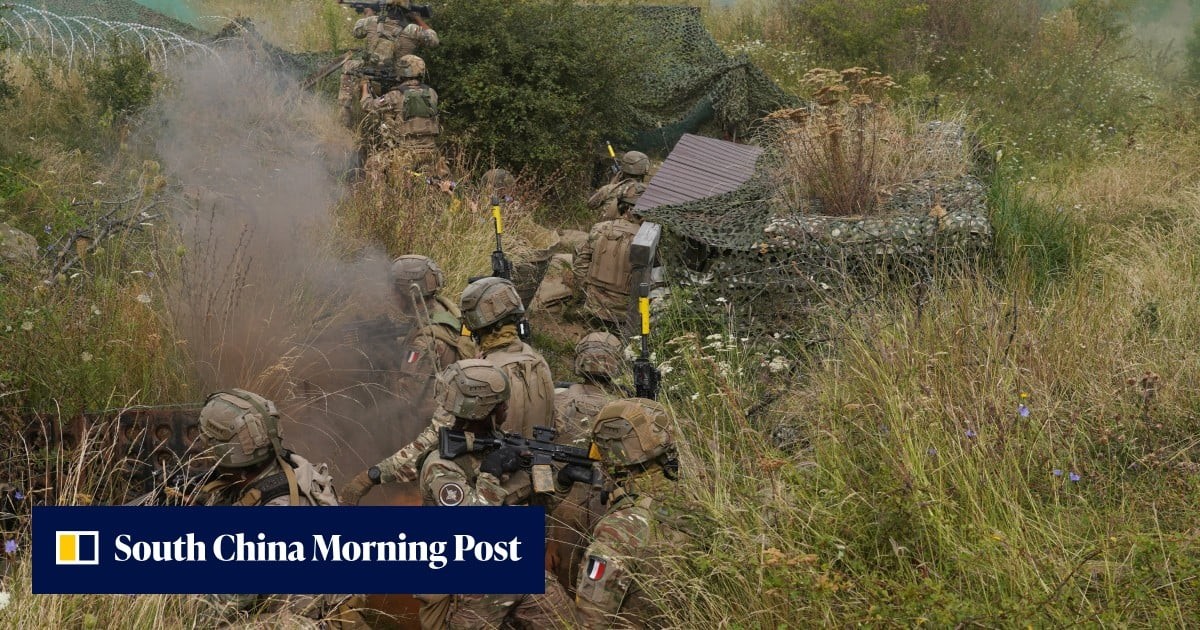
A recent NATO Eagle Spearhead drill took place in Cincu, Romania, on August 18, demonstrating rapid reinforcement capacity. Such exercises reflect ongoing adaptation to hybrid threats — including cyberattacks and disinformation — which Western officials warn are escalating across Europe. Still, Stubb maintained that hybrid operations fall short of crossing the threshold into open warfare with NATO.
He reiterated his firm belief that Russia “would ever want to attack NATO, the world’s most powerful military alliance,” framing such an act as fundamentally incompatible with Moscow’s own strategic survival. His remarks come amid heightened vigilance following Russia’s full-scale invasion of Ukraine in February 2022.
Source: South China Morning Post
Compiled from international media by the SCI.AI editorial team.