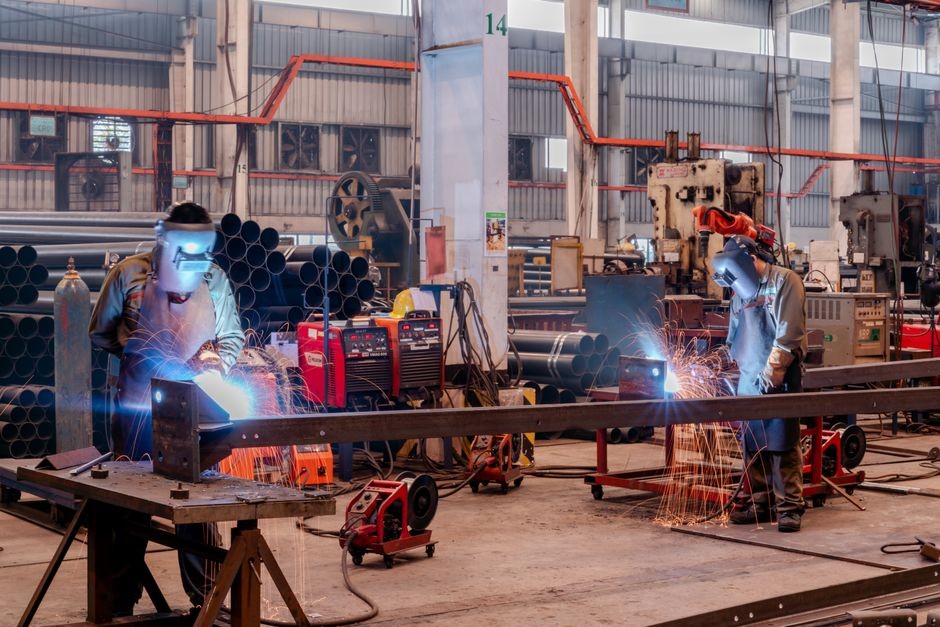
According to www.moneycontrol.com, India could forfeit $270 billion in manufacturing GDP by 2035 if it fails to adopt artificial intelligence, robotics, and other frontier technologies across high-impact industrial sectors.
Technology Adoption as an Economic Imperative
A report by Angel One projects that delayed or insufficient adoption of AI-led innovation, industrial automation, and digitisation could cost India not only $270 billion by 2035 but up to $1 trillion by 2047. The analysis identifies these technologies as essential enablers for scaling productivity and global competitiveness. Crucially, the same report estimates that wider deployment of cutting-edge tools could instead add $1.1 trillion to India’s manufacturing GDP by 2047 — illustrating the stark divergence between technological inertia and strategic acceleration.
The economic stakes are tied directly to India’s broader development agenda: manufacturing is central to its goals for export expansion, domestic job creation, and integration into global value chains. Unlike economies where automation is pursued primarily for efficiency gains, India’s strategy explicitly balances productivity with employment generation — making workforce readiness a structural prerequisite, not an afterthought.
This dual mandate means that technology adoption cannot be evaluated solely through output metrics. As factories incorporate AI for production optimisation, predictive maintenance, and real-time quality control, the nature of work shifts from manual repetition to digital interaction, data interpretation, and system oversight — demanding new competencies at every operational level.
Sector-Specific Skill Requirements
The NITI Aayog report — prepared jointly with Crisil Intelligence — identifies 12 manufacturing sectors with high potential to simultaneously drive growth, deepen global value chain participation, and generate employment. Among those examined in detail in the first volume are chemicals, telecom and networking equipment, textiles, and solar photovoltaic manufacturing. Each sector presents distinct technological entry points and corresponding skill demands: a semiconductor fabrication facility requires precision diagnostics and cleanroom-integrated software fluency, whereas a textile unit may prioritise programmable loom operation and IoT-based inventory monitoring.
Workforce transformation is therefore not about universal reskilling into AI engineering, but about embedding digital literacy, equipment troubleshooting, and data-aware decision-making across occupational tiers. For example, frontline workers must increasingly interpret dashboard alerts, calibrate digitally controlled machinery, and collaborate with automated systems — tasks requiring foundational digital competence rather than advanced coding expertise.
The mismatch risk lies not in absolute unemployability, but in misalignment: vocational training curricula, technical institutions, and industry-led apprenticeships must reflect the specific technologies being deployed in targeted sectors. Without that granular coordination, even robust infrastructure investments and policy incentives may yield suboptimal returns on human capital.
Automation and Employment: Beyond Job Displacement
Angel One’s analysis deliberately avoids framing automation as a zero-sum replacement of labor. Instead, it positions AI and robotics as catalysts for long-term manufacturing expansion — where higher productivity enhances competitiveness, attracts investment, and supports scale-driven hiring. The critical question is not whether jobs will disappear, but whether displaced tasks will be replaced by new roles requiring upgraded capabilities.
This distinction reframes the challenge: it is less about preserving existing job titles and more about enabling worker transitions into newly emerging functions — such as human-machine coordination specialists, predictive maintenance technicians, or production data analysts. The World Economic Forum’s Future of Jobs research corroborates this trend globally, identifying AI, big data analytics, and cybersecurity as among the fastest-growing skill domains — all of which intersect with modern factory operations.
India’s demographic advantage — a large, young working-age population — becomes an asset only if aligned with evolving technological requirements. General employability statistics do not capture readiness for AI-enabled manufacturing; instead, readiness must be measured by the responsiveness of training ecosystems to sector-specific tech roadmaps, including curriculum updates, certification standards, and industry-academia co-development of learning modules.
Source: moneycontrol.com
Compiled from international media by the SCI.AI editorial team.