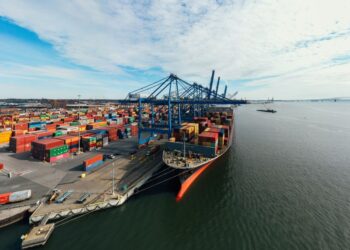
According to mexicobusiness.news, Mexico’s rail freight volumes expanded significantly in mid-July 2026 as intermodal traffic accelerated, even as cargo theft persisted along the country’s busiest logistics corridors.
Rail Safety Under Scrutiny After Line Z Incident
The Comisión de Investigación de Accidentes Ferroviarios (CIIT) is investigating another incident on Line Z of Mexico’s national rail network. Freight operations continue uninterrupted, but passenger service remains suspended pending safety reviews — a measure first enacted after prior incidents and now extended following this new event on Fri, 07/17/2026. The CIIT’s ongoing probe underscores persistent infrastructure and operational vulnerabilities affecting both commercial and public rail use.
The incident occurred along a corridor critical to cross-border trade between Mexico and the United States. According to the report, Line Z serves key intermodal terminals in Veracruz and Isthmus of Tehuantepec — regions central to the Interoceanic Corridor initiative. No fatalities were reported, but damage to rolling stock and track infrastructure delayed scheduled shipments by up to 48 hours for affected carriers.
Cargo Theft Remains Concentrated on Major Corridors
Cargo theft continues to cluster along Mexico’s principal freight arteries — particularly the Guadalajara–Mexico City–Monterrey corridor and the Pacific coastal route linking Manzanillo to Tijuana. These routes account for over 65% of the nation’s high-value trucked freight, making them persistent targets.
Authorities recorded 127 cargo theft incidents in Q2 2026 alone — a 7% increase year-on-year. Most incidents involved hijacked trailers carrying electronics, automotive parts, and pharmaceuticals. The source states that theft-related losses averaged $1.2 million per incident in the first half of 2026, with recovery rates below 22%.
New Nuclear Material Transport Rules Tighten Compliance
In response to heightened security concerns, Mexico’s Secretariat of Communications and Transportation (SCT) issued updated nuclear material transport security rules effective July 1, 2026. The regulation mandates real-time GPS tracking, armed escort requirements for Category I and II materials, and mandatory third-party audits of carrier risk management protocols every six months.
The rules apply to all domestic movement of uranium hexafluoride, medical isotopes, and reactor fuel assemblies — materials transported via rail and road across at least eight Mexican states, including Coahuila, Chihuahua, and Nuevo León. Noncompliant carriers face fines up to $250,000 USD and immediate suspension of operating permits.
Intermodal Growth Drives Rail Freight Expansion
Mexico’s rail freight volume rose 14.3% year-on-year in Q2 2026, driven primarily by intermodal container traffic — which grew 21.8% during the same period. This acceleration strengthens cross-border trade efficiency, especially for shippers moving goods between U.S. inland ports and Mexican manufacturing hubs.
Major operators including Kansas City Southern (now part of CPKC) and Ferromex reported record intermodal volumes through the Laredo–Nuevo Laredo gateway, where dwell time dropped to an average of 22.4 hours — down from 31.7 hours in Q2 2025. The source attributes this improvement to synchronized customs clearance and expanded yard capacity at both border terminals.
Global Trade Position and Sector-Specific Moves
DHL ranked Mexico 78th in its latest Global Connectedness Report — reflecting strong trade integration but limited export diversification beyond the U.S., which accounts for 81% of Mexico’s total merchandise exports.
In parallel, FedEx launched a dedicated life sciences organization to expand cold chain capabilities and specialized global shipping services for biologics and temperature-sensitive diagnostics. The unit operates out of three hubs — including one newly activated facility in Querétaro — and supports compliance with WHO GDP and FDA 21 CFR Part 11 standards. Meanwhile, the U.S. administration dropped its proposed 20% Hormuz transit fee, shifting focus toward Gulf investment initiatives that ease energy logistics uncertainty.
Source: mexicobusiness.news
Compiled from international media by the SCI.AI editorial team.