According to procurementmag.com, aerospace and defence organisations across the US and Europe are confronting a systemic capacity crisis, with order books at record highs yet backlogs swelling instead of shrinking — driven primarily by supply chain constraints rather than internal production limits.
Record Backlogs and Structural Bottlenecks
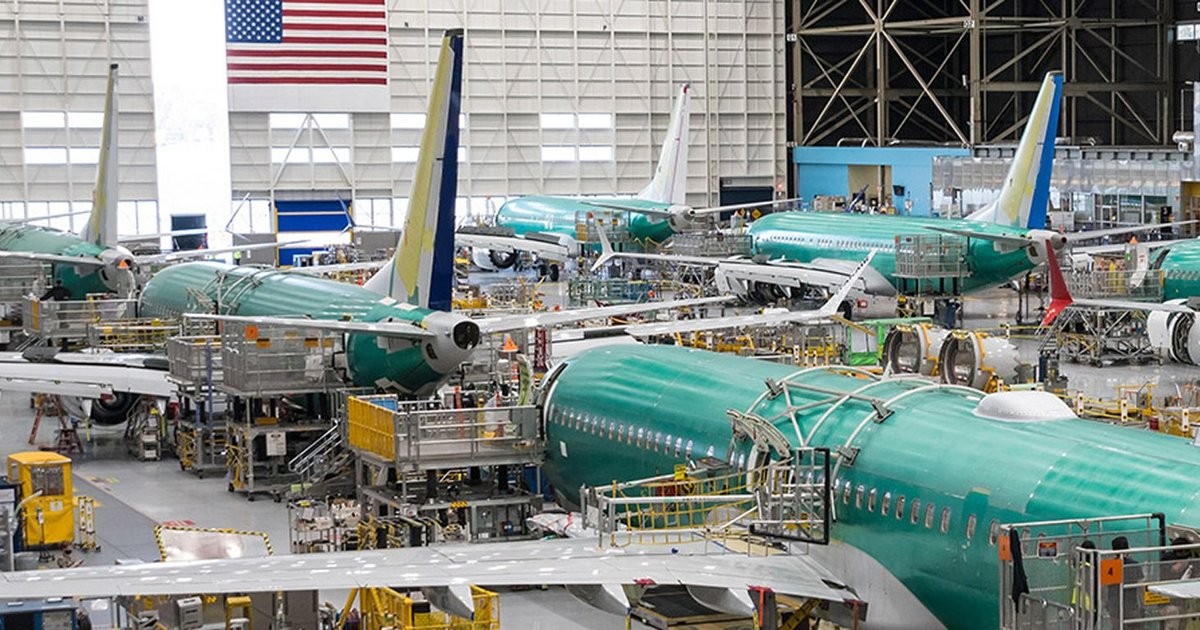
Boeing is carrying a backlog of US$695 billion, while Lockheed Martin’s missile and fire control division saw its backlog grow by 20% in a single year despite delivering at record rates. Airbus continues scaling A320-family output but remains constrained by engine supply shortages. Bain & Co’s analysis of 15 defence programmes found that 87% of companies identified supply chain issues — not labour, engineering, or capital equipment — as the most impactful bottleneck. Production growth targets between 2024 and early 2026 were set 20% to 500% higher than prior levels, far exceeding procurement functions’ ability to secure corresponding supplier capacity.
Strategic Shift: From Cost Control to Capacity Stewardship
Jim Harris, Senior Partner at Bain & Company and co-author of the report, states:
“In nearly 90% of the aerospace and defence programmes Bain analysed, supply chain constraints were cited as a key obstacle to ramping production. The companies pulling ahead are treating supplier capacity as a strategic asset, not a procurement problem.” — Jim Harris, Senior Partner at Bain & Company
This reframing elevates procurement from transactional cost management to a cross-functional capacity-planning discipline. The mismatch between aggregated industry demand forecasts and actual sub-tier supplier capacity — shared across multiple OEMs — has created systemic delays. These delays have left allied nations with reduced munitions stock, prevented airlines from expanding fleets, and caused suppliers to lose customers to competitors offering more reliable lead times.
Honeywell’s Capital Deployment Beyond Its Walls
Honeywell Aerospace is responding to its US$19 billion backlog — a 20% increase year-on-year — with unprecedented direct investment in its supply base. Jim Currier, President and CEO of Honeywell Aerospace, told Reuters:
“If I need to buy equipment for suppliers, smaller suppliers that are providing critical components for us, we will go ahead and do that as well, where necessary and where required. So, when I think of capital deployment, it’s not just within our own four walls.” — Jim Currier, President and CEO of Honeywell Aerospace
This marks a decisive break from arm’s-length procurement: Honeywell assumes financial responsibility for supplier capacity constraints, mitigating risks tied to sole sourcing and lengthy qualification cycles. Demand surges for core aerospace materials — including rare earth minerals — further strain critical material supply chains.
Four Procurement-Led Strategies to Accelerate Output
Bain identifies four actionable, procurement-driven interventions to close backlogs:
- Redesign inventory and remove non-value-adding scrap to introduce production buffers and prevent routine stoppages;
- Deploy procurement personnel on-site at critical suppliers to resolve issues collaboratively and demonstrate long-term commitment;
- Commit guaranteed volumes to the supply base — moving away from pure just-in-time manufacturing — to enable pre-production stockpiling of materials;
- Leverage digital tools such as predictive analytics and digital twin models to identify bottlenecks before they disrupt output.
Organisations applying these strategies — particularly those combining volume commitments with on-site procurement presence — are closing backlogs faster than peers maintaining traditional, arms-length relationships.
Source: procurementmag.com
Compiled from international media by the SCI.AI editorial team.