According to www.scmp.com, China is preparing for a third wave of global industrial disruption — ‘China shock 3.0’ — driven not by low-cost labor or electric vehicles, but by mass-deployed, AI-powered industrial, humanoid, and service robots.
From model to machine: the embodied AI frontier
Mark Greeven, professor of management innovation and strategy and dean of Asia at IMD, argues that while global attention focuses on frontier AI models, the real economic inflection point lies in their physical embodiment. As he states:
“AI models matter but they do not create sufficient economic value on their own. That happens only when they are turned into products, deployed at scale and woven into the fabric of the economy.” — Mark Greeven, professor of management innovation and strategy and dean of Asia at IMD
This shift — from algorithmic capability to integrated hardware-software systems — defines what Greeven calls the next frontier: embodied AI.
The model is merely one layer in a broader stack that includes power infrastructure, real-world applications, workforce adaptation, and regulatory frameworks. Beijing’s latest five-year plan explicitly prioritizes human-machine collaboration and economy-wide robot roll-out — signaling state-level commitment beyond R&D to systemic adoption.
Domestic urgency, global export trajectory
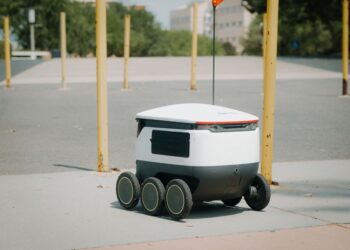
China’s domestic driver is demographic: its working-age population is projected to fall from 1 billion at its peak to just 300 million by the end of the century. This structural decline accelerates investment in automation across logistics, manufacturing, and services. For example, JD.com has predicted that robots will ultimately replace its 700,000 delivery workers — a figure underscoring the scale of labor substitution already underway.
Meanwhile, international ripple effects are emerging. Workers at Hyundai, the South Korean carmaker, have threatened strike action over robot deployment — illustrating early friction points in advanced economies confronting China’s rapidly maturing robotics ecosystem. These incidents are not isolated; they signal the beginning of a new phase in global labor-market competition.
Commercial deployment targets and policy scaffolding
Beijing has set an explicit near-term target: 10,000 AI-powered robots operating in commercial settings in 2026. This quantitative goal — published in official planning documents and reiterated in public commentary — anchors national strategy in measurable outcomes. Deployment is treated as necessary but insufficient; the government emphasizes converting installation into sustained productivity gains through training programs, interoperability standards, and sector-specific integration roadmaps.
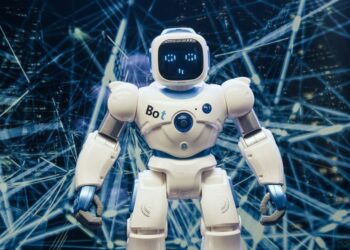
The push extends beyond industrial arms. At the 2026 World Robot Conference, UBTech unveiled a humanoid robot companion featuring lifelike skin and ’emotional AI’ — a product designed for healthcare, hospitality, and elder care markets. Such developments reflect dual-track progress: heavy-duty industrial robots for factories and warehouses, and socially interactive platforms for service environments — both underpinned by China’s leadership in open-source AI models and high-volume, low-cost manufacturing.
Supply chain implications for global practitioners
For supply chain professionals, this evolution means re-evaluating sourcing strategies, labor planning horizons, and technology readiness. Unlike previous ‘shocks’, which primarily affected cost structures (China shock 1.0) or product specifications (China shock 2.0 with EVs and batteries), shock 3.0 reshapes operational capacity itself — compressing lead times, reducing dependency on manual labor pools, and enabling 24/7 facility operation. A 2026 deployment target of 10,000 units signals not experimental pilots but commercial-scale rollout — with implications for global spare-part logistics, firmware update networks, and cross-border certification pathways.
Early adopters in Southeast Asia and Latin America are already piloting Chinese-made robotic solutions in bonded logistics zones. Meanwhile, EU regulators are reviewing safety and data governance standards for autonomous mobile robots imported from China — highlighting how shock 3.0 triggers parallel responses in trade policy, workforce reskilling, and infrastructure modernization.
Source: South China Morning Post
Compiled from international media by the SCI.AI editorial team.