According to www.mmh.com, Symbotic, a U.S.-based leader in AI-enabled robotics for supply chain automation, has acquired ARMS Innovations — a UK-based software company specializing in real-time operational intelligence — on July 2, 2026.
Strategic Expansion into Warehouse Operations Optimization
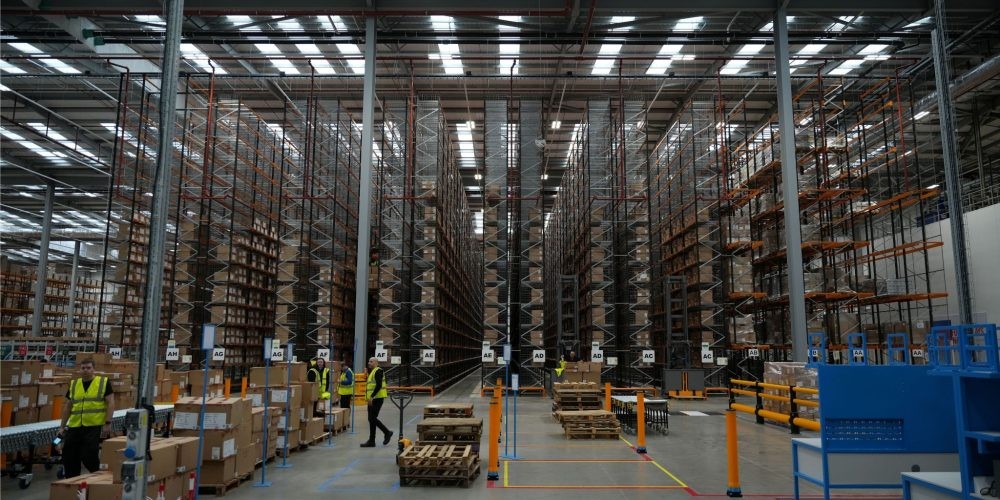
The acquisition marks a strategic pivot for Symbotic beyond hardware-driven automation toward enterprise-level Warehouse Operations Optimization, a newly defined industry category that transcends traditional warehouse management systems (WMS) and warehouse execution systems (WES). By integrating ARMS’s software platform, the Symbotic System will evolve from task-execution technology into a unified, real-time operational solution capable of orchestrating both automated systems and human workflows across entire facilities.
This shift enables Symbotic to manage end-to-end warehouse performance — including inventory flow, labor allocation, system uptime, and exception resolution — in a single digital layer. The combined offering is designed to function as a “
“operational nervous system” — delivering continuous visibility, predictive diagnostics, and dynamic resource orchestration across complex, multi-vendor environments.
According to the report, the integration is expected to extend Symbotic’s capabilities from executing discrete robotic tasks to managing holistic warehouse environments at scale.
Technical and Geographic Scope
ARMS Innovations, headquartered in the UK, has built its reputation on deploying real-time operational intelligence solutions in highly automated distribution centers across Europe and North America. Its software architecture supports interoperability with over 15 major automation vendors, including conveyors, sorters, autonomous mobile robots (AMRs), and goods-to-person systems — a critical capability for enterprises operating heterogeneous technology stacks.
The acquisition strengthens Symbotic’s global footprint: while Symbotic’s robotics deployments are concentrated in the U.S. and Canada — including installations at major retailers and third-party logistics providers — ARMS brings proven deployment experience in UK and continental European markets. This geographic complementarity positions the combined entity to support multinational clients seeking standardized operational control across transatlantic facilities.
Industry Context and Practitioner Implications
This move aligns with a broader industry trend toward convergence. As noted in the 2026 Software Survey cited by www.mmh.com, software remains “at the center of the automated warehouse,” with 78% of surveyed operators prioritizing integrated control layers over standalone hardware upgrades. Similarly, GE Appliances recently deployed advanced automation and autonomous material handling systems at its Appliance Park facility — a project explicitly tied to U.S. reshoring efforts and operational efficiency gains.
For supply chain professionals, the practical implication is a reduction in system fragmentation. Instead of managing separate dashboards for WMS, WES, robotic fleet health, and labor scheduling tools, users gain a single source of truth with closed-loop feedback. Early adopters report reductions in unplanned downtime by up to 37% and improvements in labor utilization efficiency of 22%, according to internal benchmarks shared by ARMS prior to acquisition. These metrics reflect measurable outcomes tied directly to real-time decision support — not theoretical capability.
The acquisition also underscores growing pressure on legacy WMS providers. With $4.2 billion invested globally in warehouse automation software in 2025 — per industry data cited in the 2024 Automation Study — vendors must now demonstrate orchestration capacity beyond transactional logic. Symbotic’s move signals that leadership in warehouse technology is shifting from component-level excellence to system-wide coherence.
Source: mmh.com
Compiled from international media by the SCI.AI editorial team.