Explore

  • Trending
  • Latest
  • Tools
  • Browse
  • AI Assistant
  • Subscription Feed

Logistics

  • Ocean
  • Air Cargo
  • Road & Rail
  • Warehousing
  • Last Mile

Regions

  • Southeast Asia
  • South Asia
  • Central Asia
  • Japan & Korea
  • Middle East
  • Europe
  • Russia
  • Africa
  • North America
  • Latin America
  • Australia
SCI.AI
  • Supply Chain
    • Strategy & Planning
    • Logistics & Transport
    • Manufacturing
    • Inventory & Fulfillment
  • Procurement
    • Strategic Sourcing
    • Supplier Management
    • Supply Chain Finance
  • Technology
    • AI & Automation
    • Robotics
    • Digital Platforms
  • Risk & Resilience
  • Sustainability
  • Research
  • Expert Columns
  • English
    • Chinese
    • English
No Result
View All Result
  • Login
  • Register
SCI.AI
No Result
View All Result
Home North America Supply Chain

Regional trade pacts hit 400, reshaping container shipping

2026/06/21
in North America Supply Chain
0 0
Regional trade pacts hit 400, reshaping container shipping

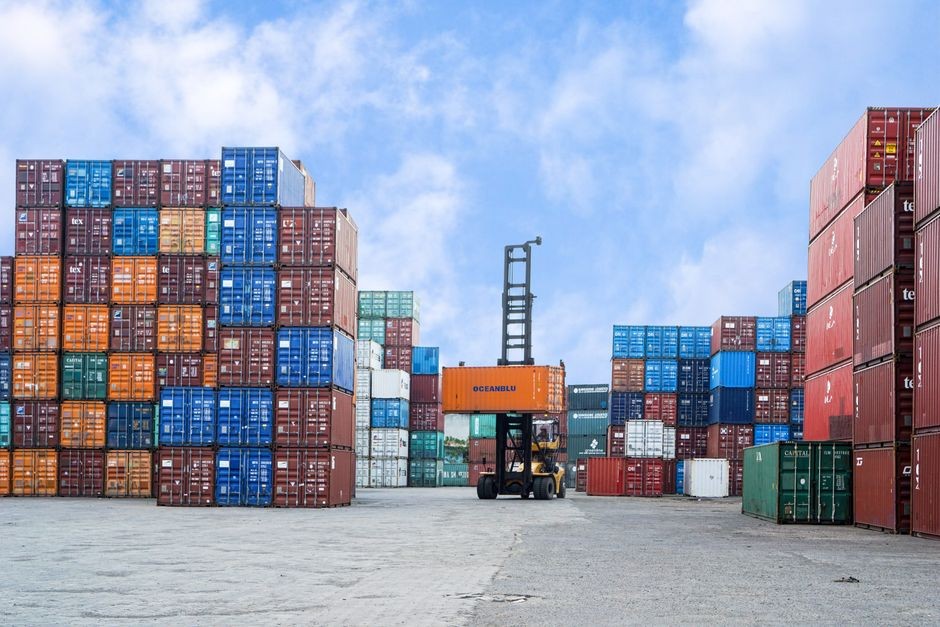
According to theloadstar.com, the number of regional trade agreements has risen from around 300 in 2020 to nearly 400 today, now accounting for 60% of global trade — up from 40% in 1990. This surge is driving a structural reorientation in container shipping, with analysts forecasting a ‘golden decade’ for regional and inter-regional corridors.

From globalisation to regionalisation

Braemar, the maritime consultancy, attributes this shift to converging forces: new trade pacts, geopolitical recalibrations, and evolving supply chain strategies. The World Bank’s latest global outlook — cited by Braemar — projects that the 2030s could become the most prosperous decade since the 1970s, powered by artificial intelligence, energy security, and deeper regional integration. Yet near-term headwinds persist: global growth is expected to reach just 2.5% in 2026, and container trade volumes are forecast to expand by only 2.5%–3.5%.

Jonathan Roach, Braemar analyst, underscored the tangible nature of the trend:

“This isn’t abstract. The interesting stuff is in the regional and inter-regional trades.”

He noted that future volume growth will concentrate on intra-Asia, intra-African, Mexico–US, and Eastern Europe–EU routes — rather than traditional east-west trunk lines. This realignment reflects a broader move away from the ‘hub-and-spoke’ model toward a more distributed ‘spoke-and-spoke’ network architecture.

Vessel orders signal strategic pivot

The shift is already visible in fleet planning. Of the 1,621 containerships currently on order, only 114 are ultra-large vessels of 20,000 TEU or more. That represents less than 7% of the orderbook — a stark contrast to the megaship emphasis of the prior decade. Owners are instead prioritising mid-sized tonnage better suited to regional ports, shorter voyages, and flexible port rotations.

Roach observed that “shipping networks built for the last 30 years of globalisation may need rewiring for the next 10.” This includes infrastructure investments in secondary ports, enhanced transshipment capabilities, and digital platforms enabling dynamic slot allocation across shorter-haul services.

Energy transition and AI: dual catalysts

Beyond trade geography, Braemar identifies two additional demand drivers: the clean-energy transition and AI infrastructure build-out. Global clean-energy investment reached $2.2 trillion in 2025, comprising roughly two-thirds of all energy investment. While IMO carbon regulations are adding an estimated $150–$400 per container on certain routes, rising shipments of solar panels, lithium-ion batteries, wind turbines, and associated components are boosting containerised freight demand.

AI presents a more time-bound opportunity. Braemar describes the construction phase of data centres as generating an “AI infrastructure bow-wave” — driving short-term container demand for servers, cooling systems, generators, and electrical equipment. However, the firm cautions that once facilities are operational, AI’s growth will rely primarily on computing power, not physical freight movement.

Source: The Loadstar

Compiled from international media by the SCI.AI editorial team.

More on This Topic

  • Dachser acquires 10% stake in Synergie Canada to expand airfreight (Aug 10, 2026)
  • Toyota opens $100M Indiana forklift plant, targets 80% electric by 2035 (Aug 9, 2026)
  • US lifts Mexico cattle ban Aug. 24 to curb beef prices (Jul 31, 2026)
  • Freehand raises $75M for AI-powered supply chain finance automation (Jul 30, 2026)
  • Amazon builds $1.1B supply chain facilities in NY, TX (Jul 29, 2026)
ShareTweet

Related Posts

Dachser acquires 10% stake in Synergie Canada to expand airfreight
North America Supply Chain

Dachser acquires 10% stake in Synergie Canada to expand airfreight

August 10, 2026
1
Toyota opens $100M Indiana forklift plant, targets 80% electric by 2035
North America Supply Chain

Toyota opens $100M Indiana forklift plant, targets 80% electric by 2035

August 9, 2026
2
US lifts Mexico cattle ban Aug. 24 to curb beef prices
North America Supply Chain

US lifts Mexico cattle ban Aug. 24 to curb beef prices

July 31, 2026
16
Freehand raises $75M for AI-powered supply chain finance automation
North America Supply Chain

Freehand raises $75M for AI-powered supply chain finance automation

July 30, 2026
25
Amazon builds $1.1B supply chain facilities in NY, TX
North America Supply Chain

Amazon builds $1.1B supply chain facilities in NY, TX

July 29, 2026
21
Digital Product Passports Boost African Trade, ESG Compliance
North America Supply Chain

Digital Product Passports Boost African Trade, ESG Compliance

July 28, 2026
18

Leave a Reply Cancel reply

Your email address will not be published. Required fields are marked *

Recommended

“供应链科技制胜之道:管理技术的经验教训…”

Winning Strategies in Supply Chain Technology: Lessons in Management Techniques…

15 Views
February 16, 2026
Africa’s 7 Critical Trade Chokepoints Exposed

Africa’s 7 Critical Trade Chokepoints Exposed

38 Views
April 6, 2026
89% of B2B Buyers Adopt AI — But Prioritize Human Expertise

89% of B2B Buyers Adopt AI — But Prioritize Human Expertise

20 Views
April 25, 2026

U.S. Reshoring Surge: 244,000 Jobs Added in 2024

39 Views
April 12, 2026
Show More

SCI.AI

Global Supply Chain Intelligence. Delivering real-time news, analysis, and insights for supply chain professionals worldwide.

Categories

  • Supply Chain Management
  • Procurement
  • Technology


  • Risk & Resilience
  • Sustainability
  • Research

© 2026 SCI.AI. All rights reserved.

Powered by SCI.AI Intelligence Platform

Welcome Back!

Sign In with Facebook
Sign In with Google
Sign In with Linked In
OR

Login to your account below

Forgotten Password? Sign Up

Create New Account!

Sign Up with Facebook
Sign Up with Google
Sign Up with Linked In
OR

Fill the forms below to register

All fields are required. Log In

Retrieve your password

Please enter your username or email address to reset your password.

Log In

Scan to share via WeChat

Open WeChat and scan the QR code to share

QR Code

Add New Playlist

No Result
View All Result
  • Supply Chain
    • Strategy & Planning
    • Logistics & Transport
    • Manufacturing
    • Inventory & Fulfillment
  • Procurement
    • Strategic Sourcing
    • Supplier Management
    • Supply Chain Finance
  • Technology
    • AI & Automation
    • Robotics
    • Digital Platforms
  • Risk & Resilience
  • Sustainability
  • Research
  • Expert Columns
  • English
    • Chinese
    • English
  • Login
  • Sign Up

© 2026 SCI.AI