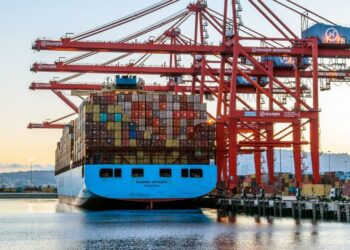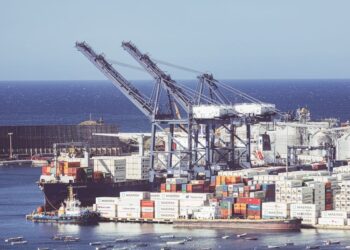
According to www.supplychaindive.com, supply chain professionals will find 2026 marked by shortages, rising costs and shifting trade dynamics — with sourcing resilience now prioritized over cost optimization in a ‘perma-crisis’ environment.
Consumer Spending Deceleration Underway
Overall consumer spending remained resilient in 2025 but is expected to decelerate in 2026 as affordability concerns and a softening labor market stress shoppers’ wallets, according to a December report from Moody’s. The report cites wage growth slowing to 2.8% year-over-year in Q4 2025 — down from 3.9% in Q4 2024 — while inflation-adjusted disposable income fell 0.7% month-over-month in January 2026.
Geopolitical Disruption Extends Through 2027
The conflict causing supply disruptions and price increases — referenced broadly across multiple Supply Chain Dive reports — is not projected to renormalize until 2027 at the earliest, per industry experts cited in the source. Companies must contend with evolving geopolitical risks, particularly as U.S. trade policy shifts: the Trump administration employed tariffs on over 3,700 tariff lines between 2018 and 2020 targeting national security and drug trafficking concerns — a precedent reshaping procurement strategy across manufacturing, retail, and healthcare sectors.
Sector-Specific Shortage Pressures
Navigating 2026 pressures makes sourcing resilience a critical strategy in food, metals, healthcare and electronics. In healthcare, injectable drugs account for the most severe shortages, according to Michael Ganio, the American Society of Health-System Pharmacists’ senior director of pharmacy practice and quality. He stated:
“If I’m a supply chain manager, I’m looking at all the potential options and trying to build as much resiliency as I can.” — Michael Ganio, Senior Director of Pharmacy Practice and Quality, ASHP
The dominance of specialty and complex medications in new drug approvals — 68% of FDA approvals in 2025 were biologics or cell/gene therapies — combined with higher-than-customary price increases for previously approved products, drives projected drug supply gaps totaling $1.2 billion in unmet clinical demand through Q3 2026.
Modal Flexibility and Forwarding Strategy
Modal flexibility will be a critical tool in maintaining supply chain resilience in 2026, Mike Short, president of global forwarding at C.H. Robinson, emphasized. This includes multi-carrier tendering across rail, trucking and maritime legs — a shift accelerating since 2023, when 42% of shippers added ≥2 alternate transport modes to core lanes. The trend aligns with S&P Global Mobility’s assessment that “in this environment, supply chain resilience is crucial” — a conclusion drawn from analysis of 1,850 North American manufacturing facilities reporting lead-time volatility exceeding 35% YoY.
Source: Supply Chain Dive
Compiled from international media by the SCI.AI editorial team.