According to Supply Chain Dive, FedEx, Maersk, and GXO Logistics downplay the competitive threat posed by Amazon Supply Chain Services, stating their core capabilities and business models differ significantly from Amazon’s new offerings.
FedEx, Maersk, and GXO Assert Business Model Differentiation
FedEx President and CEO Raj Subramaniam stated in a CNBC interview that Amazon Supply Chain Services and FedEx operate “two different businesses entirely.” This distinction underscores the companies’ belief that Amazon’s entry into third-party logistics does not disrupt their core operations. According to the report, Amazon’s new supply chain offering includes freight transportation, parcel shipping, air freight, global logistics, distribution, and fulfillment services, available to any business—not just those selling on Amazon’s marketplace.
Amazon’s New Offering Targets Broad Market Access
Amazon Supply Chain Services aims to expand beyond its e-commerce platform, enabling any company to leverage Amazon’s logistics infrastructure. The service includes end-to-end supply chain solutions such as warehousing, last-mile delivery, and customs clearance. However, executives from FedEx, Maersk, and GXO argue that Amazon’s focus on e-commerce-driven fulfillment and digital integration does not align with their specialized, large-scale, and diversified logistics operations.
Maersk Highlights Global Scale and Multimodal Expertise
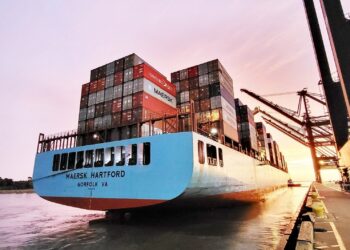
Maersk CEO Vincent Clerc emphasized that the company’s international capabilities, especially in container shipping and multimodal transport, set it apart from Amazon’s current model. The source notes Maersk operates a global fleet of over 700 vessels and manages more than 300 million metric tons of freight annually. According to Clerc, Amazon’s logistics network is still evolving and lacks the depth of Maersk’s global reach, which spans over 1,000 ports across 100 countries.
GXO and FedEx Stress Core Competencies
GXO Logistics, a leading third-party logistics provider, highlighted its focus on complex supply chains for industrial and manufacturing clients, managing over 200 million square feet of warehouse space across 20 countries. FedEx, with a network of over 400,000 delivery drivers and 600 aircraft, emphasized its parcel and express delivery dominance in North America and Europe. The source states that both companies maintain substantial investments in automated sorting hubs and real-time tracking systems, which are not currently central to Amazon’s publicized strategy.
Competitive Landscape and Industry Response
While Amazon’s entry into third-party logistics marks a significant market shift, the three companies maintain that their long-standing client relationships, infrastructure investments, and global reach are not easily replicable. According to the report, Maersk’s global network transports approximately 35% of all containerized goods shipped internationally, while FedEx serves over 220 countries and territories. These figures underscore the scale of existing logistics networks that Amazon is still building.
“We’re not in the same business as Amazon. We focus on enterprise-grade, end-to-end supply chain solutions, not just online retail fulfillment.” — Maersk CEO Vincent Clerc
- FedEx operates 600 aircraft and 400,000 delivery drivers globally.
- Maersk manages a fleet of over 700 vessels and serves 1,000 ports in 100 countries.
- Amazon Supply Chain Services is now available to all businesses, not just marketplace sellers.
- Maersk transports 35% of all containerized goods shipped internationally.
- GXO Logistics manages over 200 million square feet of warehouse space across 20 countries.
Source: Supply Chain Dive
Compiled from international media by the SCI.AI editorial team.