According to www.joc.com, the U.S. Customs and Border Protection (CBP) will begin issuing the first wave of refunds under the International Emergency Economic Powers Act (IEEPA) to U.S. importers starting April 20. The refund process was triggered by the February Supreme Court decision that invalidated tariffs imposed on most U.S. trading partners.
Refund Prioritization and Scope
The CBP will prioritize unliquidated entries in the initial phase of the refund rollout, as stated by Eric Johnson, Senior Technology Editor. This means entries that have not yet been formally settled or finalized by customs will be addressed first — a procedural detail critical for supply chain finance teams managing cash flow and duty recovery.
Broad Regulatory Context
Multiple regulatory and geopolitical developments are shaping near-term supply chain operations across modes and regions:
- The Federal Maritime Commission (FMC) has launched a non-adjudicatory probe into ocean carrier practices for shipping hazardous and radioactive goods out of the U.S., focusing on packaging compliance — per Michael Angell, Senior Editor, East Coast Ports.
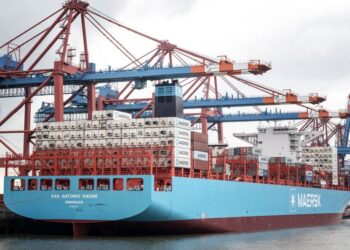
- The FMC unanimously rejected Maersk’s petition to waive the mandatory 30-day notice period for an emergency fuel surcharge on U.S. trades — a decision analysts link to growing shipper influence in Washington and declining carrier leverage, according to Peter Tirschwell, Vice President.
- Iran’s closure of the Strait of Hormuz has cut off regional petrochemical plants, causing polyethylene prices to nearly double since the end of February, potentially boosting U.S. resins exports by 2026 (Michael Angell).
- In Southern California, automation efforts at Los Angeles–Long Beach marine terminals remain stalled due to hesitation from port authorities, despite terminals’ legal right to automate having been guaranteed since 2008 (Peter Tirschwell).
Operational Pressures Across Modes
Rising fuel costs are reverberating globally: diesel prices in the EU are up 33% since the start of the war in the Middle East, prompting trucker protests across Ireland, the UK, France, Germany, and Italy (Greg Knowler). Meanwhile, U.S. consumer electronics imports face headwinds from both elevated fuel prices and rising memory costs — prompting buyers to reconsider or delay purchases of high-end devices (Eric Johnson).
Industry-Wide Implications
Supply chain professionals must now reconcile multiple concurrent pressures: tariff refunds arriving amid tightening working capital, regulatory scrutiny intensifying on hazmat handling and carrier pricing transparency, infrastructure bottlenecks persisting at key gateways, and raw material cost shocks cascading through manufacturing and export planning. As one analyst observed, the FMC’s enforcement of the 30-day surcharge review period reflects a structural shift —
“Forcing liners to wait for the 30-day notice period to end before implementing war-related surcharges reflects a multi-year ascendency of shipper influence in Washington and the corresponding decline in carrier heft.” — Peter Tirschwell, Vice President
Source: www.joc.com
Compiled from international media by the SCI.AI editorial team.